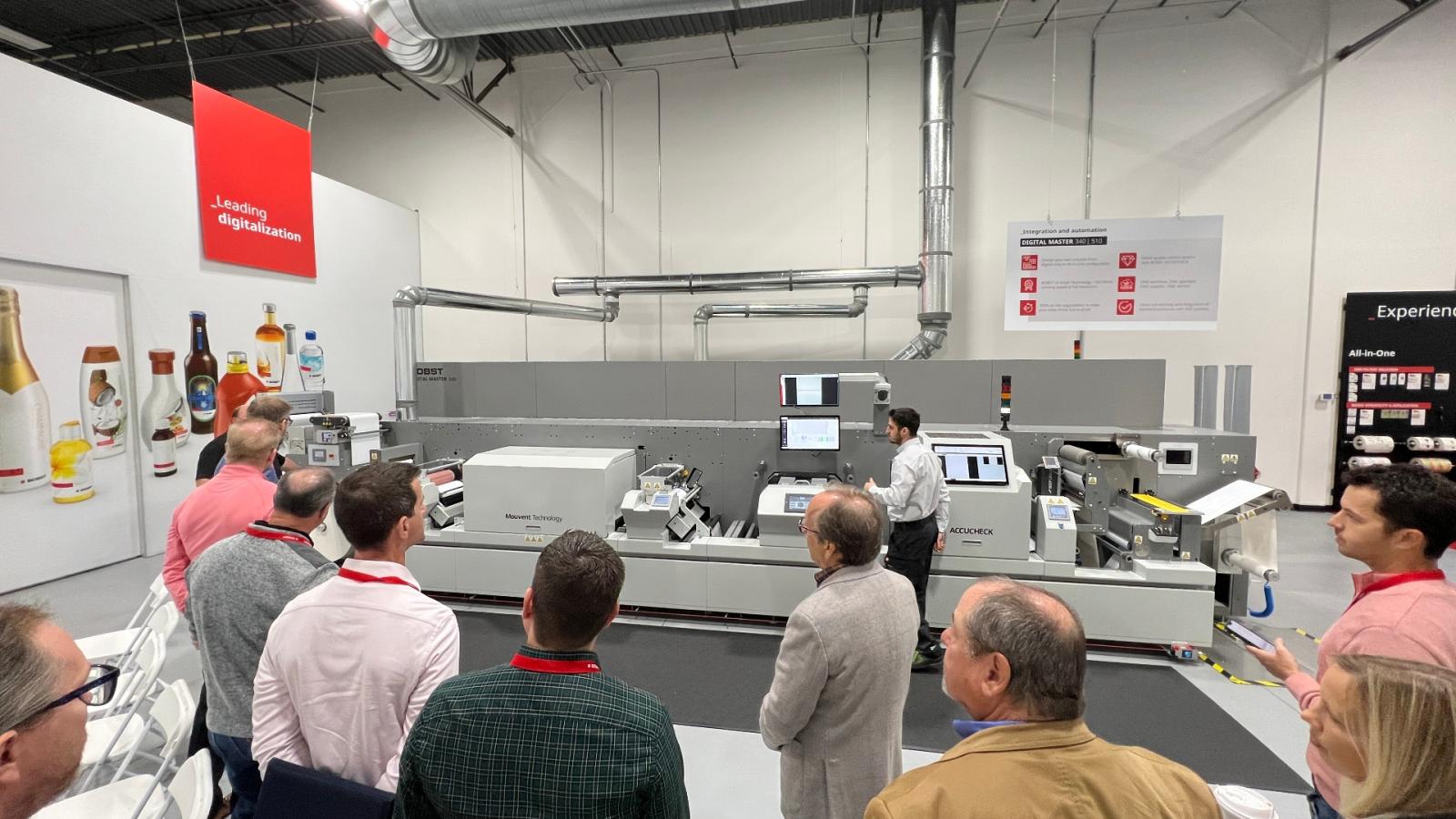
In a presentation by Business Unit Director for North America Matt Bennett, he presents the sweet spot for the DM340. Toner-based and other digital-only label printers are for short runs, small volume, and moving up in the market, complexity, volume, and speed, the dedicated FLEXO machines take over - and well, just in between those two markets, the DM340 fits like a hand in a glove :-) All according to BOBST. Judging from the attendees, the DM340 seems to fit in perfectly as a machine that can be configured to your demand and expanded as your needs grow.
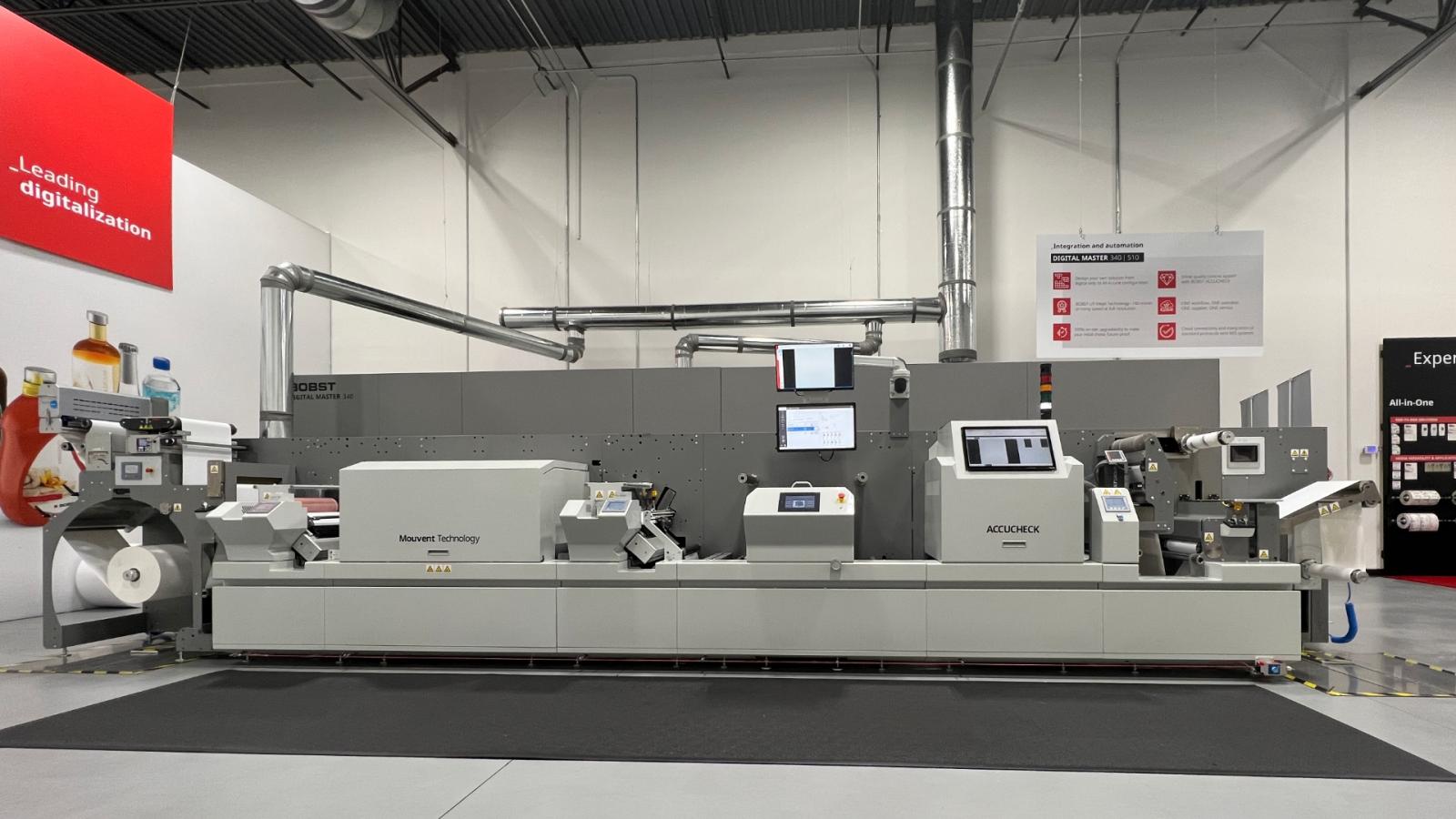
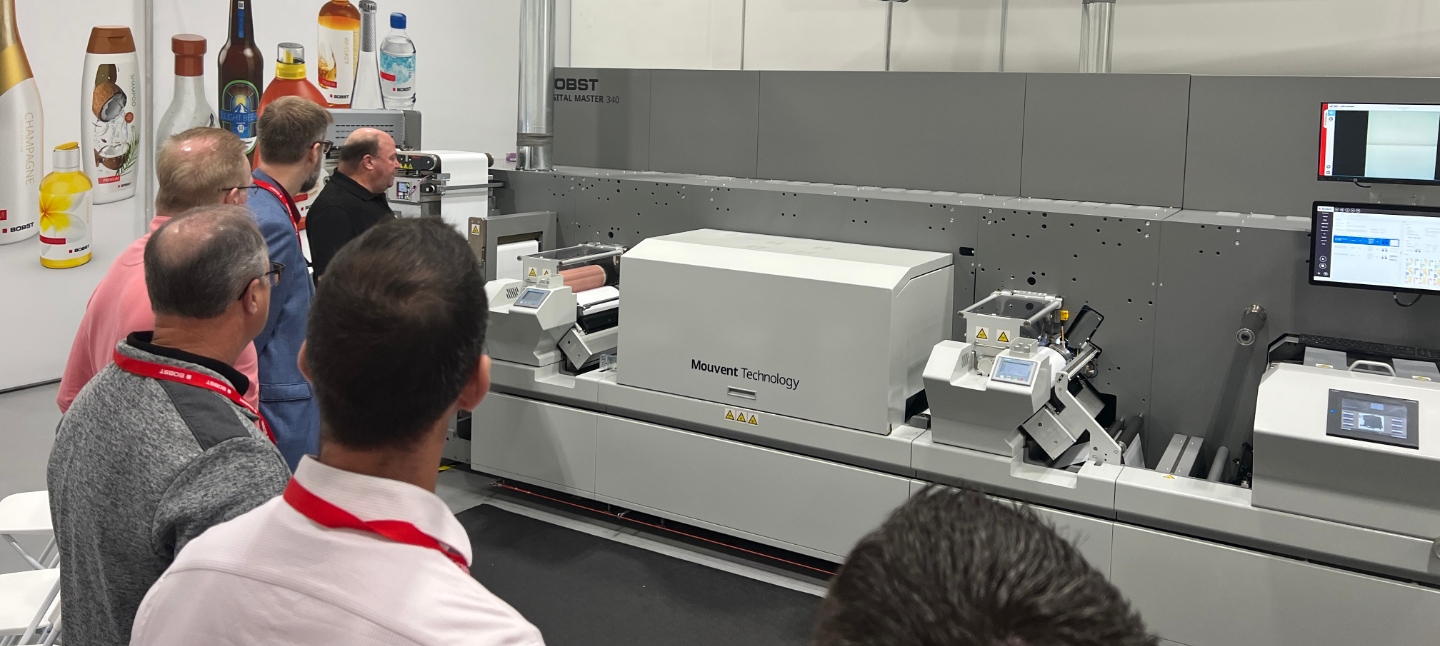
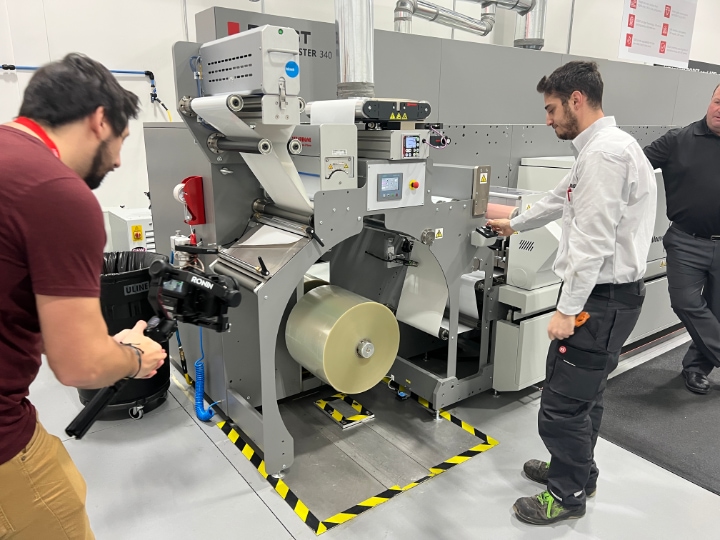
Built on a solid metal frame, the machine can be configured from an all-digital to a hybrid machine with all the blinks and whistles you can imagine. The configuration being demoed at the Open House consists of an unwinder, with some tension control, the almost mandatory corona-treater from Vetaphone, followed by the first flexo-unit. The first flexo-unit is used to print white but can, of course, be used for whatever is needed - typically white or pre-treatment. The solution has a splicer control sensor to ensure the substrate is ready for production. After the first flexo-print unit, you now see the Mouvent Digital Print unit. The seven-color digital printing unit is the same (new version, though) as the Mouvent LB702 series. You can also choose to use digital white in your setup - which comes in handy when you have variable data on a transparent substrate - or if you don't have any flexo-units in your configuration :-)
After the digital print module, this solution has yet another flexo-unit, which is used for a clear spot-varnish in the demos here.
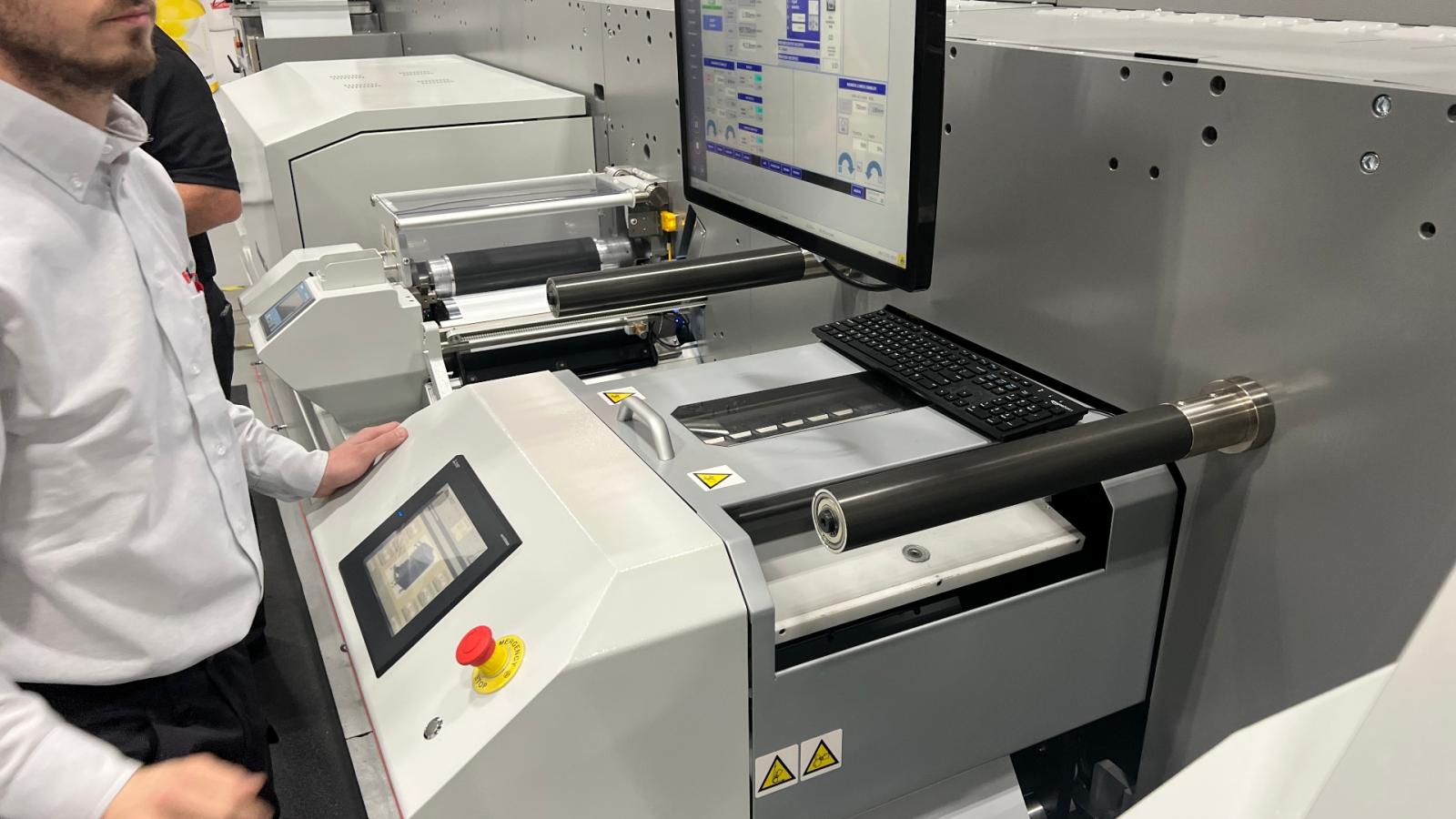
As mentioned, you can configure the machine to your needs, so you would typically choose to have more flexo-units here. However, in the demo setup, BOBST configured a rotary die-cutter. Innovative and integrated with the entire workflow. The rotary die-cutter has a semi-automatic guidance and setup system with an automated plate feeder - and when the demo is running, I can see on the guests that this is smart, fast, and effective - I will revert on that later!
After the rotary die-cutter, the setup has an Accucheck module that checks the job against several parameters. Dean Heartel from BOBST explains how the Accucheck, which is currently also used on folding carton equipment from BOBST, will gain more features as they are currently under development.
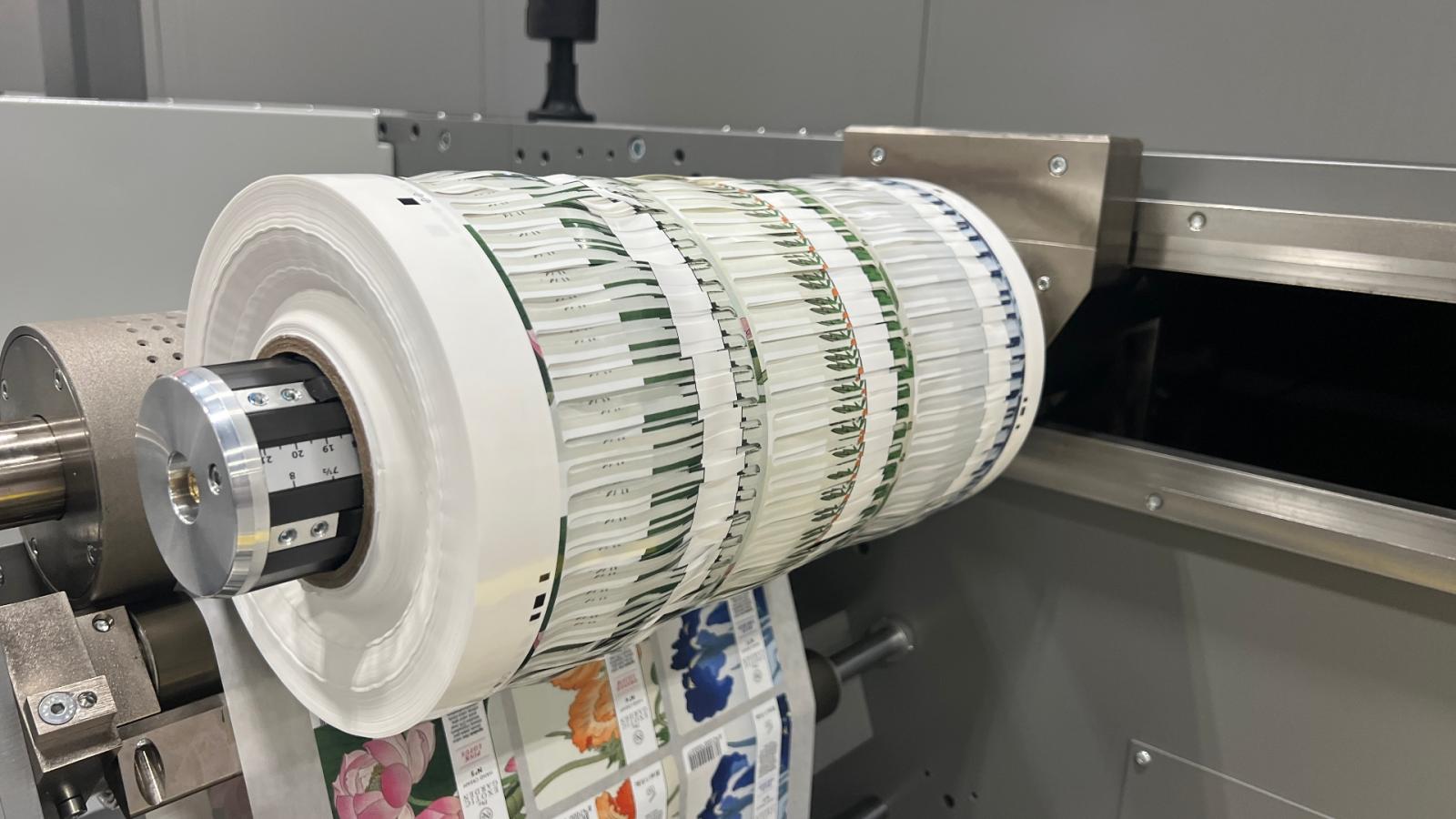
Finally, the labels pass through the quick-cutter and snowball before being rewound and ready for further processing.
So for who is this machine?
BOBST has built a machine, and they have set the bar high. The sweet spot Matt Bennett defined in his presentation is for sure a good place for the DM340, but I believe that the DM340 appeal to an even broader customer base. When I spoke to even startups and smaller companies, the interest was not in the digital-only Mouvent solution but in going directly to the highly flexible DM340. What I heard from the attendees at the Open House event was that the fast setup time and how it can be configured and expanded further later on are excellent add-ons, and in times when markets continue to grow, it's about having the right equipment. Another KPI that surprised me a bit was the one-supplier approach. As most Flexo machines can be configured with modules from different suppliers, some converters experience a battle about who to call when issues occur. Last but not least, the service organization is constantly being touted as extremely important, and again BOBST scores high.
It will, of course, be interesting to see how the market will judge the DM340 when it's being delivered; however, the speed of 100 m/m is very attractive, and though the new HP V12 is a serious contender, it's also a machine that probably targets a slightly different market. For companies who look into the mixture of a conventional press, with all the advantages of digital, the DM340 seems like an excellent machine to consider!




Login
New User? Signup
Reset Password
Signup
Existing User? Login here
Login here
Reset Password
Please enter your registered email address. You will recieve a link to reset your password via email.
New User? Signup
Currency Exchange Graph