Both are important, each requires expertise
Web to Print is an important sales channel for just about every print operation. Whether it is a Business to Business (B2B-brand portal) or Business to Customer (B2C-public retail) the customer experience (CX) and user experience (UX) must be maintained to keep the site useful and relevant. While interdependent and discrete, all too often CX and UX are mistakenly used to describe the same things. But they are very different and require different approaches to designing and maintaining their effectiveness.
"It is a cohesive, integrated set of experiences.” Don Norman, inventor of the term User Experience, Apple Team 1993
UX is a subset of CX. Distinguishing the two may seem complex initially, however it is possible to simplify where and why they exist; and, how they inform ecommerce. It is the design of the website, the interactive nature as experienced through the User Interface (UI); accordingly, UI is a subset of UX. Before the explanation gets buried in initialisms, let’s define UX and UI.
UX defines what a UI designer can create on a website and what functionality is possible
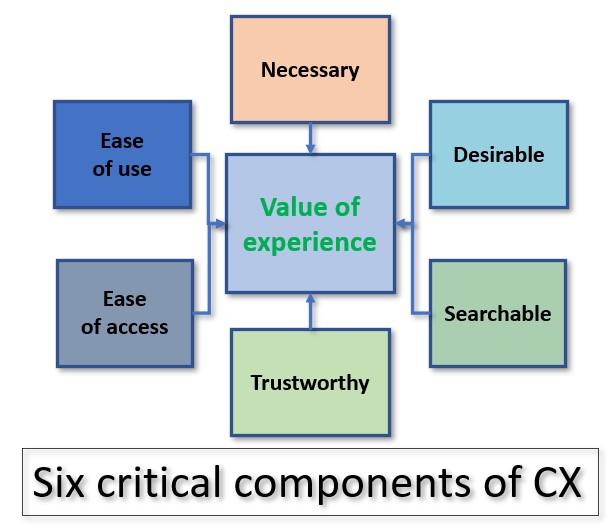
CX is the comprehensive understanding of website effectiveness. It is the result of every interaction a customer has with your website; from navigating to talking to customer service and receiving the product/service purchased.
These are the most basic points of assessing a website:
Oracle, a major enterprise software company, found 74% of executives insist customer experience creates the willingness of a customer to be a loyal and repeat user. Why is this important? Forrester Research determined “Customers will pay 4.5 times more for an excellent customer experience versus a poor customer experience. CX innovators lead CX laggards in growth by 5.1 times.” Customer Relationship Management (CRM) provides tools that makes understanding how the CX is faring and, if used properly, can keep the CX a vital revenue channel.
Marketing refers to customer touchpoints as opportunities to create an impression about the brand and product. Design, the UI, is an important factor along with ease of use and, achieving the consumer’s desired result. So where are the touchpoints?
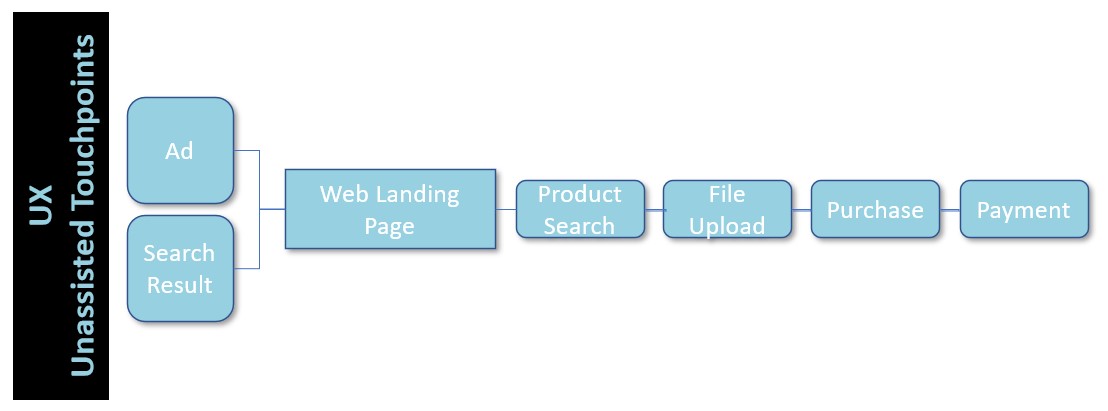
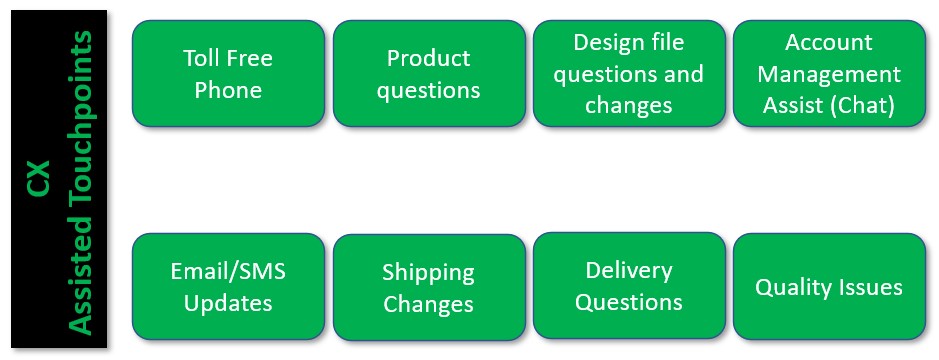
The CX touchpoints listed on the graphic (above) are typical of a web-to-print site, both branded portal for B2B and retail B2C. Each can port data on usage to the CRM to gather individual customer activities (note: may require an API). Regular reports can be produced from the data gathered in the CRM for evaluation purposes such as determining trends in customer behavior, product selections, and other issues related to customer interactions.
Keeping the website look & feel fresh with regular feature updates, new product images and descriptions (where appropriate), contribute to a positive CX. A positive brand experience is the result of an easy to navigate UI; a UX with features that are relevant and works well; allows customers to control results; and delivers a CX that supports the customer on each of the touchpoints they encounter while using the website.
References:
https://www.hotjar.com/customer-experience/
https://www.superoffice.com/blog/customer-experience-strategy/
https://www.forrester.com/Only+One+In+Five+Companies+Deliver+Good+Or+Great+CX/-/E-PRE9504#




Login
New User? Signup
Reset Password
Signup
Existing User? Login here
Login here
Reset Password
Please enter your registered email address. You will recieve a link to reset your password via email.
New User? Signup
Currency Exchange Graph