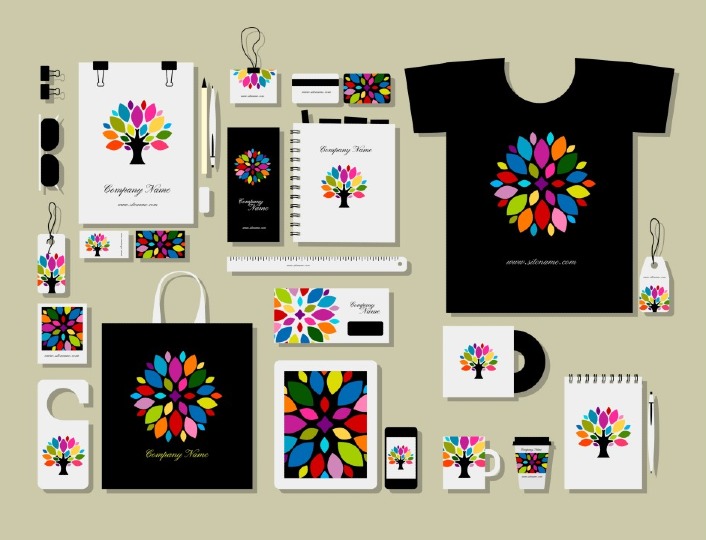
Mountain Lakes, New Jersey, USA - "The future of print will increasingly be individually customized with the images we want, delivered wherever we want, printed on demand when we want, and applied to whatever products we choose," Mark Hahn wrote in The Target Report (May 2021). This inexorable trend has accelerated in the COVID and post-COVID periods. Initially, social distancing and the ease of online ordering was a factor, as was the desire to spruce up our personal at-home spaces with personalized décor. Going online first to order unique items is now often the go-to first response, picking up the phone and engaging in personal interaction a comparative nuisance. Ordering many types of printed items is no exception.
Building a robust and efficient online system has increasingly been accomplished with the support of well-heeled private equity funds seeking the higher margins possible with the scale and automation obtainable in an online environment.
Two Online Print Businesses Merge, Different Models Remain
Printful and Printify announced on November 5th that the companies will merge in what is being billed as a merger of equals. By the 20th of the month, the shareholders and regulatory authorities had indicated final approval of the transaction, and the new executive team positions were announced. The Printful CEO will be the new CEO of the merged company, taking the top position, while the Printify CEO is now the President and Head of Platform. The two brands will continue to operate separately, at least for now, with the name of the holding company still undetermined.
Both companies are providing what is known as white-label services to hundreds of thousands of independent resellers of on-demand printed products. In a white-label business, the manufacturer produces products that can be sold under the reseller’s brand. Designers offer unique products under their own name, logo, and brand identity, never revealing that the product was made by others. With the white-label strategy, the two sites support a thriving network of online designers and retailers, many of which self-identify as being part of the “Print-On-Demand Community.”
When the merger was announced, the influencers on YouTube that act as self-appointed print-on-demand consultants were all in a dither about the merger, but they quickly coalesced in a near unanimous and positive opinion that the merger was good for the Community. There are several major categories that are the primary driver of revenue on both systems. Apparel is the number one featured category. Personalization is available on a multitude of wearable items, from the expected tee‑shirts, hoodies, hats, and jackets, to more unique items such as swim trunks and sports bras, all of which can be individualized with print. Other categories include home and office décor, drinkware, stationery, and customized gift items. The merged company can now offer in excess of one thousand distinct products.
Theirs is a tale of two business models that are fundamentally different. Printful, founded in 2013, is an online print-on-demand service that owns and manages its production facilities, and with fulfillment centers in North America and Europe. Printing technology utilized by Printful in its manufacturing sites includes Kornit Digital fabric printers and the Coloreel embroidery system (For more on Coloreel, see: The Target Report: Troubled Times for Graphic Machinery Innovators – July 2024.)
On the other hand, Printify, founded in 2015, is purely a technology company that acts as an intermediary, connecting its creator community to 85 third-party pre-qualified suppliers. Based on this asset-light model, Printify is able to offer a much broader product range and wider geographic footprint, including manufacturing partners in China, Australia, the US, and multiple countries in Europe. If you want to offer customized dog collars, Printify is the way to go.
As one Reddit user put it: “Printful makes stuff. Printify lists products made by different manufacturers.” In both cases, the companies have prospered by serving the print-on-demand community in the new diversified universe of design-driven retailers, sometimes dubbed the “creator economy.”




Login
New User? Signup
Reset Password
Signup
Existing User? Login here
Login here
Reset Password
Please enter your registered email address. You will recieve a link to reset your password via email.
New User? Signup
Currency Exchange Graph