In thousands of hotels in America, you find a strange little and extremely
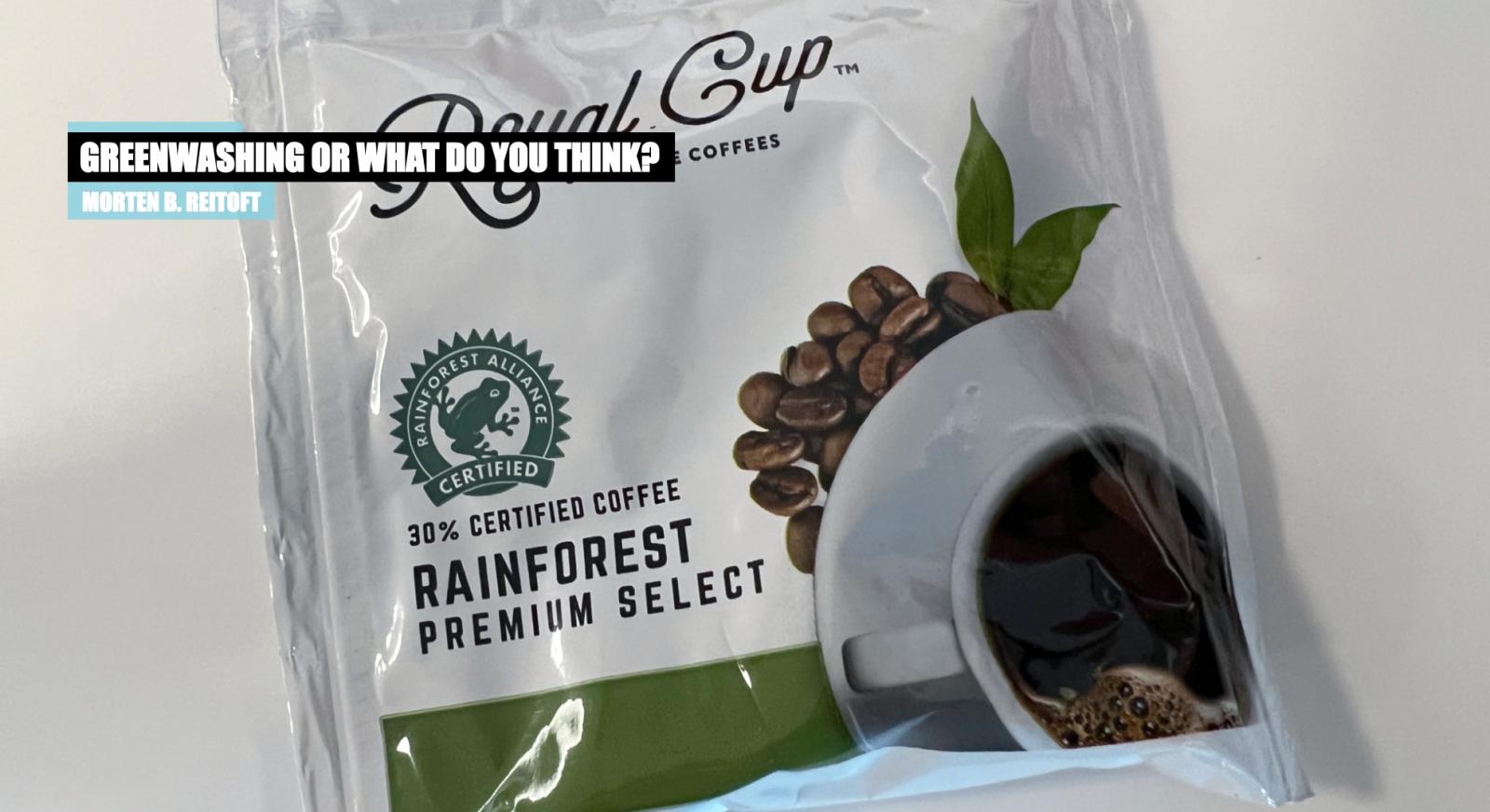
cheap quality coffee brewer (list price less than $22.00 - nobody has asked how sustainable the production of that device was). It brews one cup of coffee, and the quality depends on what coffee you add to the not-always-so-nice and cold tap water. However, on my recent trip to the US, my eyes fell on the coffee pouch pictured above. The coffee was rather good, but then I noticed the "
Rainforest Alliance Certified" logo on the pouch and that 30% of the coffee was certified. Why 30%? Why not 100%? If only 30% is certified, does that mean that the remaining 70% isn't good or complies with whatever standard Rainforest Alliance demands?
And why add a 30% logo? Does it make me feel better about the coffee and the brand?
To understand this further, I looked at the Rainforest Alliance website - and there is a lot to read to understand. But essentially, the organization has set a number of mandatory terms and voluntary terms to farmers and companies supporting a more sustainable goal - in VERY broad terms.
I am always a bit skeptical about organizations like Rainforest Alliance and Fairtrade, as these organizations also need to make money to provide their services and sometimes become the product itself! To understand the Rainforest Alliance Certifications program, we first need to understand the coffee market, which is only part of what the Rainforest Alliance works with. Coffee is a globally widespread commodity and is enjoyed almost everywhere. However, the farmers growing the beans are just the first step of a very long supply chain, and to put it in perspective, most farmers make only 2-7% or less of the retail price in the developed world. Most farmers are small family-operated farms, and according to
Vournas Coffee Trading, 70% of all farmers globally have 5 acres or about 20,000 m2. If you are a family-operated coffee farmer, most of the regulations set by Rainforest Alliance are not applicable.
The idea with Rainforest Alliance and similar organizations is hopefully good. With all the best intentions, I am just worried this won't make much difference to the people who grow the beans. Maybe a majority of the additional price on a certified coffee is just another added cost that adds profit to every chain of the supply chain. With that said, I can't help thinking about us, the consumers! When we buy organic products, certified products, or products that have some certification, are we easy victims as we believe and want to believe that our purchase improves people's lives? To some extent, I think it's the case, so as long as the Rainforest Alliance Certificate is on a coffee pouch - we 'oversee' the 30% or believe the 30% makes enough of a difference to the people we of good hearts want to support.
So my conclusion is. This is greenwashing. Consumers have NO chance to know how much they contribute to the farmer, and even if they want to understand Rainforest Alliance, it's not easy, or almost impossible, to see how much of your purchase directly supports the farmer. That one of the terms set by the Rainforest Alliance is traceability doesn't make much sense when the certificate provided has no ID, so you can take that specific product and trace it.
The Rainforest Alliance is an almost $100,000,000 business with a profit AFTER projects of about $20,000,000 - why are not all the profits distributed to the projects, and will the logo in the future change your buying behavior? I doubt it, to be honest!




Login
New User? Signup
Reset Password
Signup
Existing User? Login here
Login here
Reset Password
Please enter your registered email address. You will recieve a link to reset your password via email.
New User? Signup
Currency Exchange Graph