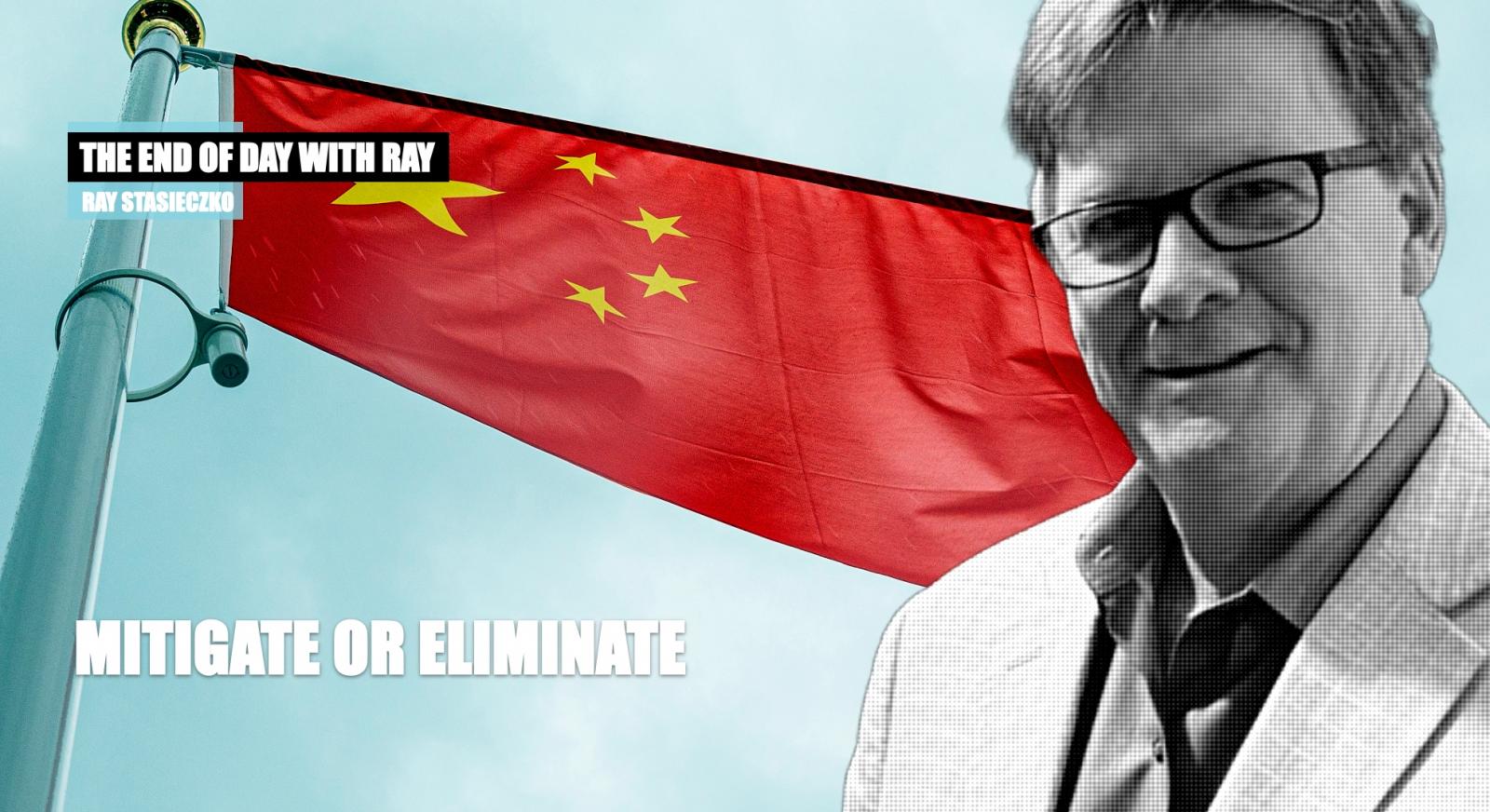
In the episode published Friday, February 10th, the headline is "China balloons," and just a few minutes into the episode, you quickly learn that the topic of today is whether we should mitigate or eliminate the things we don't like - or eliminate directions that aren't good. The free world vs. dictators. We all know he is right, and we also know that we have allowed dictatorships like China to become the producer of products and parts that we are 100% dependent on. There are many voices in the world about this and how we should start minimizing or totally eliminating trade with dictators - and if we look at the European dependency on Russian gas and corn, it is time to consider draining these dictators' sources of money.
The former Danish Prime minister and former Nato general secretary Anders Fogh Rasmussen has formed the Copenhagen Democracy Summit, where industry leaders, artists, politicians, and NGOs are gathered to discuss the future of democracy - and, the conclusion, stop trading with China.
In Ray Stasieczko's Friday episode, he pretty much says the same, and with his focus on the office-print segment, he explains how a company like Ricoh has already decided not to build their machines in China - yet still with Chinese parts. In our part of the industry, a company like Heidelberg - which used to be a German industry beacon - is now partly Chinese-owned and produces machines sold as Heidelberg machines in and outside China. If you buy a CX-104 machine, it's a Chinese product, and whether it's of equal quality is not essential. What is important is how western companies can embrace a system that isn't democratic, that violates human rights massively, monitor their population beyond anything that can be justified, and more.
It's inevitable that trading with China has given them a super-power status and continues to become the largest economy in the world rapidly. Have we fed a beast that now sends balloons with military spying capabilities over free and democratic countries? Have we fed a beast that will fight wars against democracy and free speech and even defend countries like North Korea, Iran, and other dictators in the world?
The answer is yes, and every time we buy a product where a majority of the components are from China, we support China and its growing influence in the world. I know companies like Heidelberg don't give a shit about this as long they make money, but do you think it's ok? Do you think it's good for humanity? Do you think it will potentially influence your human rights and ability to read, think, and write whatever you like?
I am not so sure!




Login
New User? Signup
Reset Password
Signup
Existing User? Login here
Login here
Reset Password
Please enter your registered email address. You will recieve a link to reset your password via email.
New User? Signup
Currency Exchange Graph