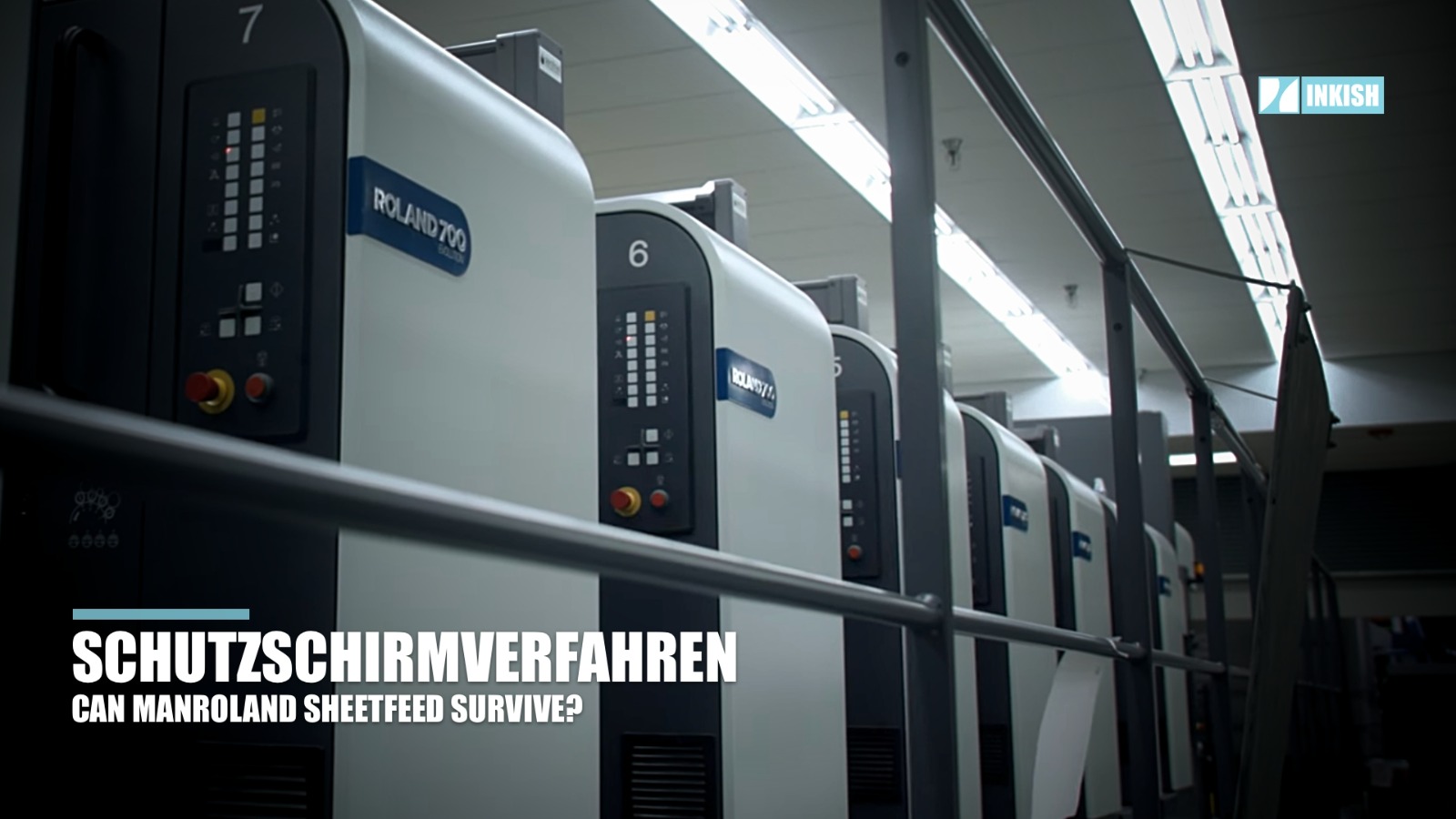
It’s not an insolvency where the previous owner loses control. It’s more like a protective shield, with Langley Holding, guided legally by Arndt Geiwitz (SGP Schneider Geiwitz) and legal experts from BUSE, including Prof. Dr. Peter Fissenewert, helping the company find solutions. Geiwitz acts as a custodian for the debtor. The current owner, Langley Holding, has promised to secure existing customers and be an active participant in the restructuring process.
Manroland Sheetfed has, since Langley took over, lived somewhat of a shadow life, often seen as an outsider among the big five. Heidelberg, Koenig & Bauer, Komori, RMGT, and Manroland Sheetfed have all faced difficulties due to changing market conditions. First came the financial crisis in 2008/2009, then the COVID-19 pandemic, the energy crisis, inflation, wars, and—perhaps the latest blow—tariffs imposed by the US administration.
We have filmed Manroland Sheetfed customers in the US, and they have all expressed a high level of satisfaction with the printing presses, the service, and the company. Despite being in a weaker position than others in the market, the Evolution 700 and 900 series have been sold, and leadership in the US has expressed optimism. However, currency exchange rates and tariffs, which have made the machines about 30% more expensive, have been challenging for everyone. In its statements, Langley pointed to a decline in the Chinese market, which aligns with what INKISH CEO Henrik Klem Lassen has experienced at several Chinese trade shows—not specifically about Manroland Sheetfed, but across multiple Western suppliers.
Langley acquired the company in February 2012, following its insolvency. Although the purchase price was not disclosed, assets acquired through insolvency are typically valued relatively low. At drupa 2016, Tony Langley spoke confidently about a bright future, and Manroland Sheetfed did grow its revenue—from the first publicly reported €214.7 million in 2020 to a peak of €361 million in 2022. Since then, however, the decline has been steady, and it’s important to note that since 2021, the figures have included DruckChemie.
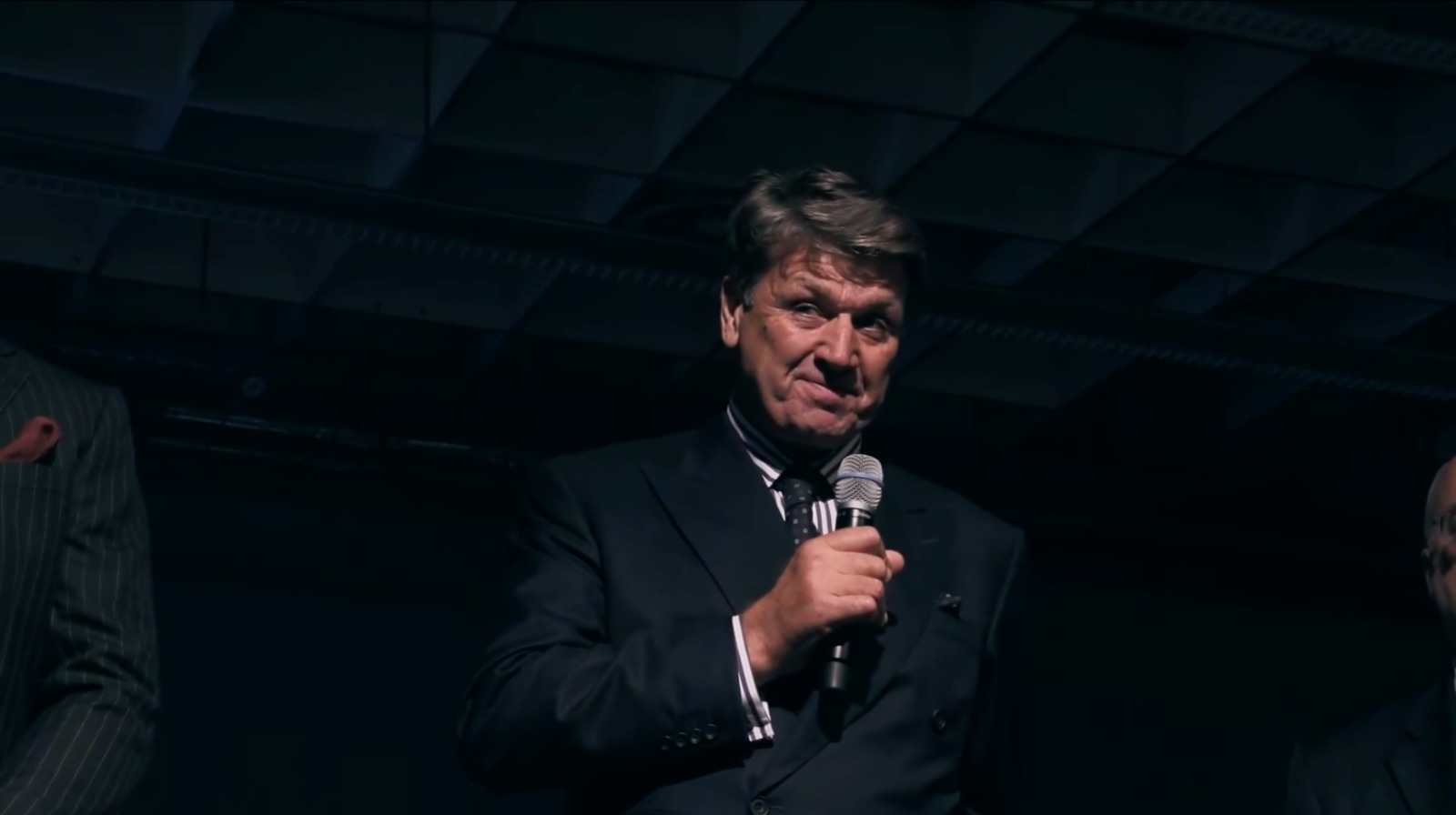
So, what is the situation going forward? The market is not developing very positively, and despite better numbers from both Heidelberg and Koenig & Bauer, the offset industry continues to face structural challenges. At Heidelberg’s 175th anniversary press conference, CEO David Schmeding and Manroland Sheetfed CEO Mirko Kern announced that Heidelberg would sell a Heidelberg-enabled Manroland Evolution 900—allowing Heidelberg to offer a VLF solution it currently lacks. A smart move by Heidelberg, but it remains uncertain whether this cooperation will continue under the Schutzschirmverfahren.
From a broader market perspective, the offset print market has generally been declining over recent years, and many industry observers expected Manroland Sheetfed to be the most vulnerable player. The conditions that led to this situation remain. Tariffs remain and are unlikely to disappear anytime soon. Market conditions are not expected to return to “normal” in the near future. At the same time, Langley notes that the Chinese market has weakened compared to previous years.
At Heidelberg’s 175th anniversary, the agreement between Heidelberg and Manroland Sheetfed was confirmed, giving Heidelberg access to an Evolution 900 series press integrated with Prinect, effectively filling a gap in its VLF portfolio.
So what now?
Langley may attempt to reduce costs to sustain some level of operation. Service for existing machines will certainly continue, but the market for new presses is likely to remain very limited. And the key question remains: who would invest in a new press from a company with constrained R&D and fewer long-term options?
In my view, the more likely scenario is that Langley will attempt to sell Manroland Sheetfed—but the number of viable buyers is limited. Heidelberg could potentially be interested, especially given its current cooperation, but how would the Bundeskartellamt view such an acquisition? Heidelberg and Manroland have previously explored a merger, but both companies were significantly larger at the time. In 2008, their combined revenue was €6.1 billion; in 2009, it dropped to €4.6 billion. Today, both are much smaller, with a combined revenue of around €2.4 billion.
In 2009, discussions about a “super-merger” failed when Allianz, then owner of Manroland, declined. Despite both companies now being smaller, several industry sources still believe a merger between Heidelberg and Manroland Sheetfed is unlikely—for multiple reasons.
Interestingly, many of the same sources believe that Koenig & Bauer could acquire Manroland Sheetfed, which would create a very dominant player in the VLF segment—potentially leaving them as the only significant supplier in that format. Companies like Komori could technically acquire Manroland, but there is little indication they would want to take on a complex German manufacturing operation.
So then what?
If Langley decides not to continue, one possible path for Arndt Geiwitz would be to break the business into smaller parts and sell them individually.
As my co-writer said:
The question is no longer who will own Manroland— but which parts of Manroland are worth owning?
A long shot could be Manroland Goss as a buyer. They would likely not be interested in continuing R&D and manufacturing of new presses, but since they already service various web offset machines across brands, they might see a service-driven business opportunity here. Still, it remains a long shot.
The situation is difficult, and with around 2,000 machines installed globally, time is critical. If a solution is not found, many customers will face uncertainty—and dissatisfaction.

Proofed (Human)

Listen to This Article

Loading...

Login
New User? Signup
Reset Password
Signup
Existing User? Login here
Login here
Reset Password
Please enter your registered email address. You will recieve a link to reset your password via email.
New User? Signup
Currency Exchange Graph