Human capital and an inclusive workforce are crucial for developing resilient, innovative, and forward-thinking organizations. Together, they underscore the importance of people as valuable assets and the need to cultivate diverse and equitable environments where everyone can contribute and thrive.
Human capital refers to the skills and abilities of individuals within an organization, while inclusion pertains to the opportunities and benefits provided by the workplace. Together, these elements create a cycle of value where talent can thrive, innovation can grow, and organizations can become more adaptive, ethical, and successful.
Human capital is essential for operations, and building an inclusive workforce in the predominantly male-dominated graphic arts industry presents additional challenges.
I have encountered remarkable individuals whose stories exemplify the human spirit and a commitment to improving, guiding, and supporting the team, making it stronger, more assertive, and ultimately achieving excellence.
A great example of a successful inclusive workforce is Paperworks Industries
They have a collection of success stories that highlight individuals who have surpassed expectations and achieved remarkable accomplishments that might initially seem incredible.
Human resources played a crucial role in identifying and removing obstacles for these individuals, enabling them to make valuable contributions that are often recognized only years later.
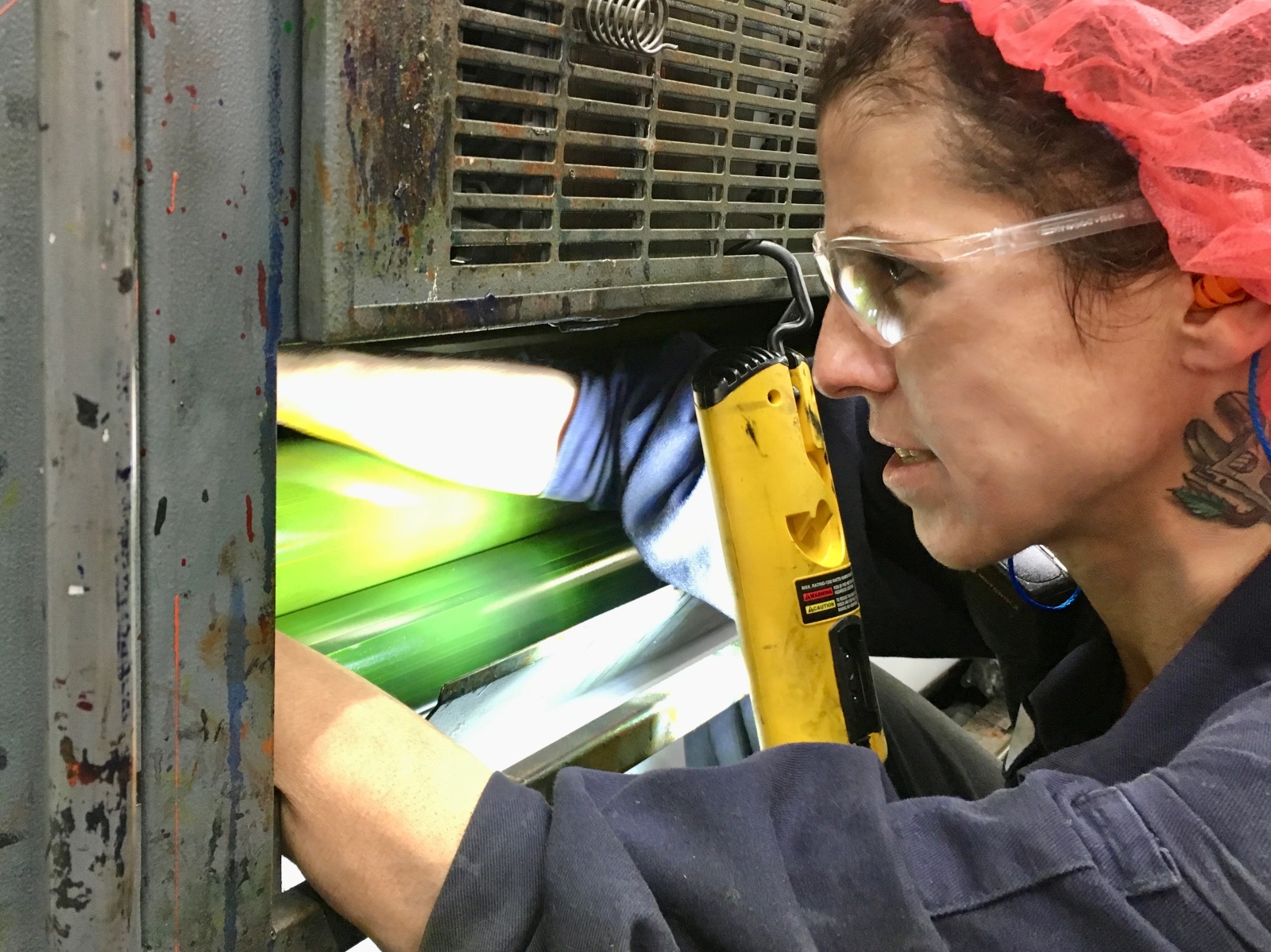
One is Brandi, and we collaborated numerous times on a scheduled preventive maintenance programs for the Manroland 900 and 700 presses. I was impressed by her comprehensive understanding of the presses' functions, systems, and intricate technical details. Her confidence in troubleshooting issues and her ability to develop practical solutions for problems stemming from the wear and tear of continuous 24-hour operations were especially noteworthy.
What stood out about Brandi was her versatility. When she wasn't leading and performing preventive maintenance on the presses, she was busy welding, cutting, or repairing various equipment, including pile flippers, sheeters, die cutters, folder/gluers, and even rebuilding pumps. Overall, she became a highly skilled millwright.
Brandi provides updates and outlines key details for implementing the preventive maintenance program to the team. During these weekly preventive maintenance sessions, press crew members work closely with the maintenance support team. The programs at Paperworks are highly effective, as they significantly reduce downtime due to machine breakdowns.
As she reflected on her professional development, she realized that she had never imagined achieving such a high level of knowledge and expertise in repairing industrial equipment and printing machines. Joy filled her heart as she reminisced about how far she had come.
She acknowledged that the journey wasn't easy, especially since she initially had to compete against physically stronger colleagues with much more experience. However, her strong interest in learning and her enjoyment of professional challenges kept her motivated and progressing. She also expressed her gratitude for the support she received from Maintenance Lead Hand Mark Szymanowski, who offered valuable advice and assistance from the very beginning.
Kevin consistently achieves the fastest make-ready times on the Manroland 900 and 700 presses, minimizing material waste and surpassing expectations.
Kevin has been a dynamic team leader in the pressroom for many years, earning the respect of his colleagues through his professional and hands-on work ethic. He possesses humility and insight, which draw the attention of his peers. Kevin actively engages in his role as a team leader and occasionally operates the press to run jobs, ensuring he stays updated and focused on keeping every machine running smoothly and without issues.
Their stories motivate other organizations to give exceptional individuals a chance to create a positive impact and inspire them to pursue their dreams and professional goals.
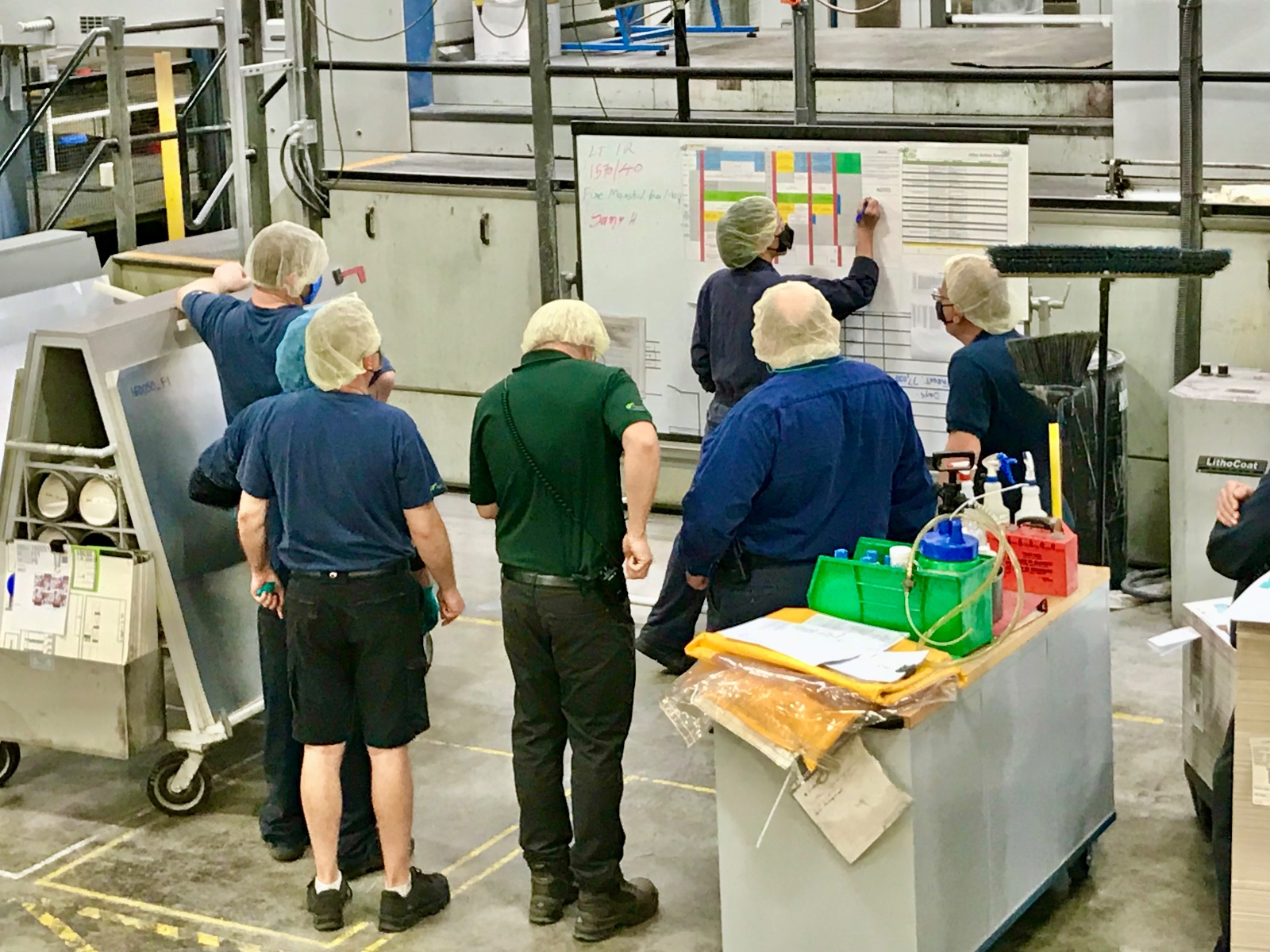
Collaboration is essential for optimizing processes. Here, Brandi and Kevin are working together to implement necessary mechanical adjustments to the delivery of the large-size Manroland 900 press.
Human Resources (HR) is crucial in sustainable organizational growth beyond hiring. The HR team is essential for shaping company culture and supporting employee development and performance.
A proactive HR team ensures the workforce aligns with business goals and advises leaders on organizational structure and long-term talent strategies.
One of the most challenging tasks for the HR team is talent acquisition and workforce planning, which involves recruiting and retaining skilled employees.
By adopting a proactive, data-driven, and candidate-focused strategy, organizations can expedite the hiring process and effectively match candidates to roles within a fast-paced, competitive, and multicultural labour market.
To attract the right candidates, highlight the organization's culture, vision, and opportunities for growth. Developing a strong employer brand will draw in the types of candidates that the company needs to succeed.
Social media effectively showcases authentic employee experiences on your careers page, providing potential applicants insight into your workplace.
Streamlining the hiring process by identifying and removing bottlenecks to fast-track interviews, leading to same-week decisions. Implement pre-screening tools for quick assessments to minimize time spent on unqualified applicants.
Assessments should go beyond technical skills. HR team must highlight essential personality traits, adaptability, and cultural fit. Clarify "must-have" skills versus "trainable" abilities and emphasize skills-based hiring focusing on fundamental competencies rather than degrees or titles.
Traditionally, the role of HR has been more reactive, focusing on compliance, hiring, and conflict resolution rather than being actively engaged on the ground. However, HR Gemba walks are not yet widespread; they are gaining popularity in progressive, lean-oriented, and employee-centric organizations.
HR Gemba Walks are a powerful, people-centred approach to connecting HR with daily realities, improving employee experience, and supporting inclusive workplace cultures. They move HR from policy enforcement to cultural stewardship and proactive support.
HR Gemba Walks apply the principles of traditional Gemba walks, which involve "going to the real place to see real work" within the context of human resources.
Rather than focusing on machines or manufacturing lines, HR Gemba walks focus on people, processes, culture, and employee experience.
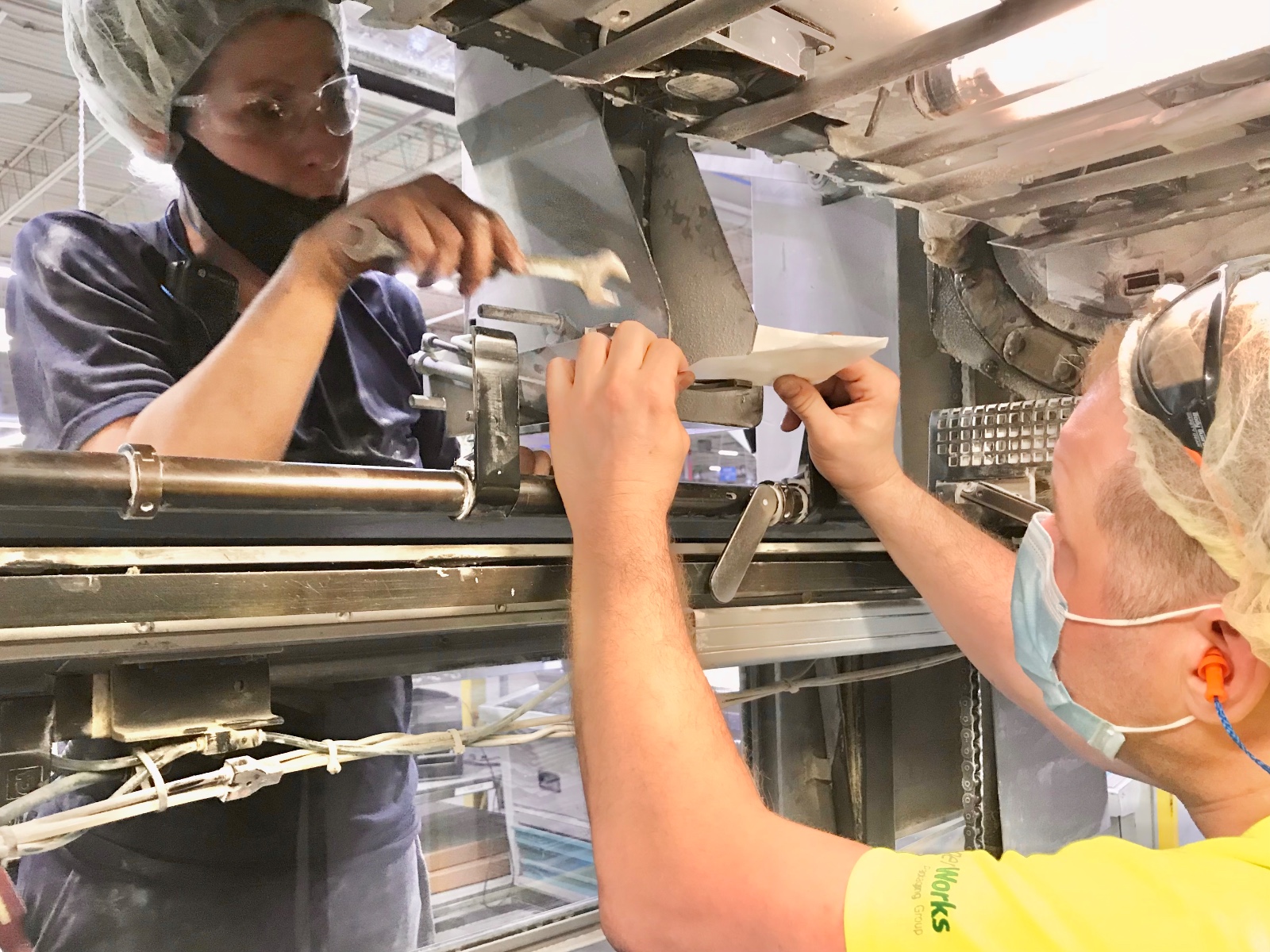
I had the pleasure of observing Katie Morrison, the Director of Human Resources at PaperWorks Industries, and Christine Young, the Human Resources Manager, as they conducted Gemba walks through the plant. They moved quietly and unobtrusively, overseeing employees as they worked while occasionally engaging in small conversations and asking questions to frontline workers.
I was especially impressed by the immediate positive impact their presence had on the plant. They consistently checked in with promoted individuals, new hires, and senior employees, treating everyone with kindness and respect. These interactions were part of a routine, not just a one-time event.
Industrial psychologists are valuable assets, especially for organizations aiming to optimize performance, enhance employee satisfaction, and make strategic HR decisions.
Their psychometric assessments and structured interview guides improve the alignment of candidate roles in the hiring phase. They also help create systems for evaluating and boosting individual and team performance while identifying toxic dynamics, communication breakdowns, or mismatched values.
Maintaining a fulfilling culture is a collective effort that requires support from both management and HR teams.
Identifying star performers, or high-potential employees, requires more than simply evaluating who works the most extended hours or receives the most praise. True stars consistently deliver high-impact results, elevate those around them, and demonstrate the potential to grow into more complex roles.
Common traits of star performers include consistent high performance, strong problem-solving abilities, adaptability, leadership influence, alignment with core values, and potential for growth beyond their current roles.
"Synchronized workers and machines" is not a dream; it is increasingly becoming a reality, albeit one that brings both promise and complex challenges.
Synchronized workers and machines require real-time coordination between human labour and machines, with integrated workflows aimed at achieving maximum efficiency.
The packaging industry is transforming through the integration of Manufacturing Execution Systems (MES), enabling direct production based on real-time data. As a result, human operators can adjust to workflows while machines guarantee precision and speed.
In the Soviet Union, Stalin envisioned industrial productivity through an early form of "synchronized workers and machines," but with different goals and methods than those pursued today.
During Stalin's era, particularly during the First and Second Five-Year Plans (1928–1941), the Soviet Union prioritized rapid industrialization. A primary aim was to convert a backward peasant economy into a modern industrial power.
While it originated in a very different economic and political context, it shares conceptual touchpoints with modern management, especially around productivity, motivation, and recognition — but also serves as a cautionary tale.
Industrial output and efficiency became top Soviet priorities in the 20s, institutionalized through central planning, labour discipline, and ideological campaigns. During the Stalin era (1920s–1953), the government highly centralized and state-controlled the workforce.
The goal was to rapidly industrialize the USSR, establish a command economy, and shape workers into loyal, disciplined workforce.
Pioneers of the Scientific Management initiative, such as Aleksei Gastev, inspired by Taylor's scientific management theory, introduced systematic approaches to work management.
In 1920, Gastev founded the Central Institute of Labour (CIT) in Moscow to train workers to perform mechanical tasks efficiently, transforming them into highly productive contributors to industrial production. Vladimir Lenin, who provided initial funding for the project, supported the establishment of the CIT. The institute focused on developing efficient work methods and training programs to enhance industrial productivity.
Gastev's methodology was the blueprint for organizing the Soviet workforce, aiming to transform workers into highly efficient contributors to industrial production.
Gastev's methods and efforts significantly impacted labour practices in the Soviet Union. He aimed to harmonize human labour with industrial machinery to improve overall productivity. His approach included detailed studies of simple, repetitive tasks, such as material cutting, to find and implement more efficient techniques.
He broke tasks into measurable, repeatable actions and used time-and-motion studies to improve productivity. He saw Taylorism as a management theory and a revolutionary method for reorganizing the Soviet industrial system.
Soviet leadership, including figures like Leon Trotsky, promoted the militarization of labour. This approach treated labour as a duty akin to military service, aiming to instill discipline and meet urgent demands.
These measures collectively illustrate the Soviet Union's early efforts to mobilize and control the workforce, setting the stage for later initiatives like the Stakhanovite movement, which further sought to boost productivity through exemplary individual achievements.
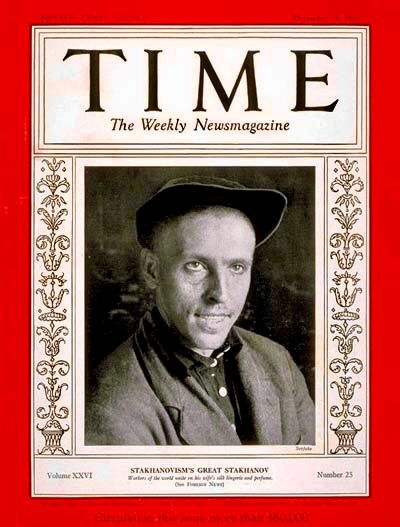
The Stakhanovite movement was a Soviet initiative in the 1930s to boost worker productivity by promoting exceptional labour achievements as models for others. It was named after Alexei Stakhanov, a coal miner who reportedly extracted 102 tons of coal in less than six hours on August 31, 1935, surpassing his quota by 14 times.
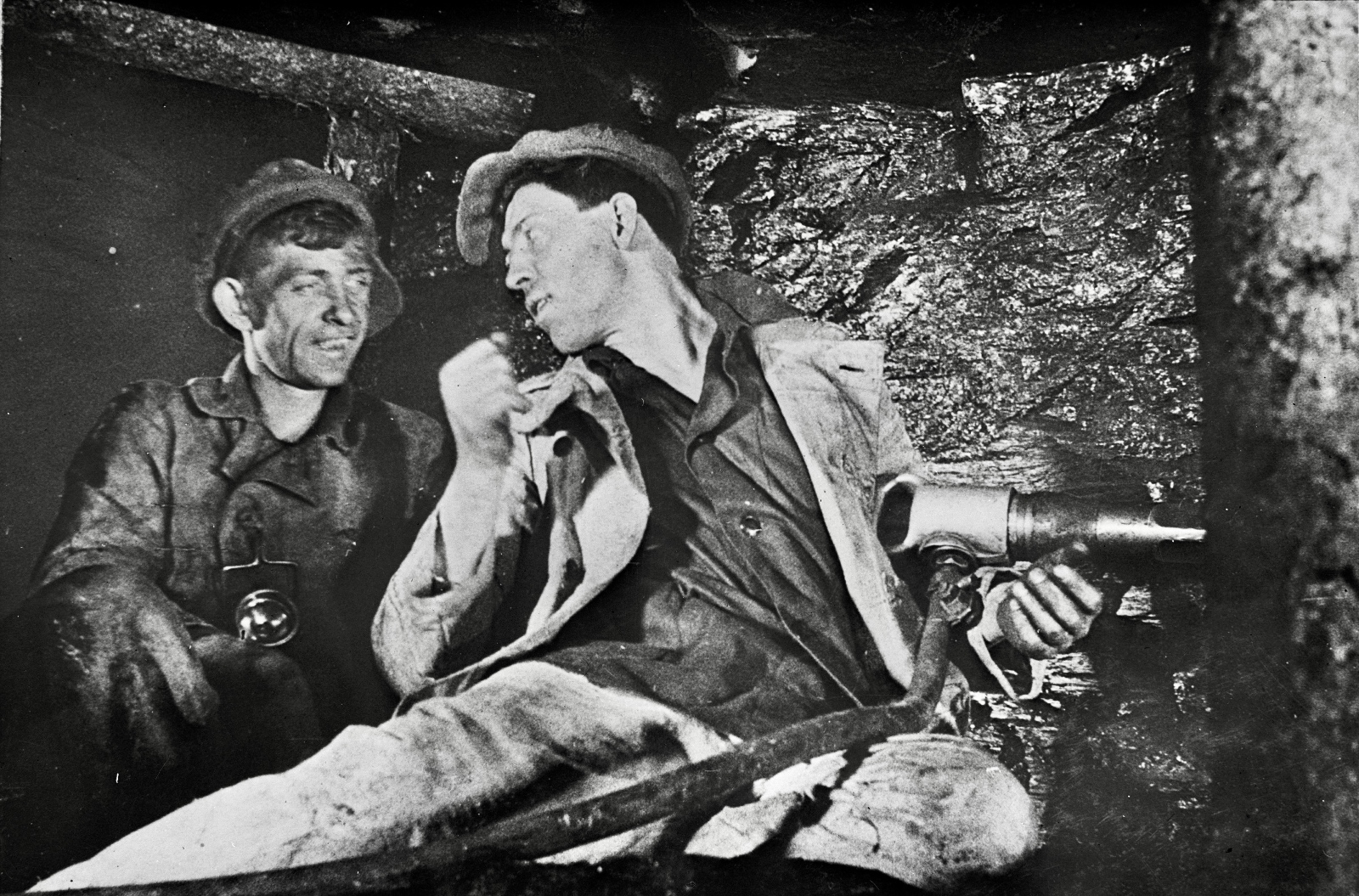
Although the movement began in the coal industry and quickly spread to other sectors, it encouraged workers to exceed production targets through improved techniques and dedication.

The Soviet Communist Party actively promoted the movement, organizing conferences and training programs to disseminate best practices and recognize outstanding workers.
Initially, the movement led to significant increases in output, with reports indicating industrial labour productivity rose by 82% during the second five-year plan (1933–1937).
Stalin found Russia with a wooden plow and left it with atomic bombs — but over the graves of millions.
Despite the critical perspectives on Stalin's era, he remains a complex and controversial figure in Russian history, and his legacy continues to influence the Russian psyche. He established a political system based on central planning and enforced collectivization, transforming an agrarian economy into an industrial nation and ultimately elevating the USSR to global superpower status, albeit at an immense human cost.
Stalin led the USSR during World War II, playing a crucial role in the defeat of Nazi Germany. The success of the Red Army solidified the USSR's military superpower status.
In recent years, there has been a gradual acknowledgment of Stalin's historical contributions despite the severe human rights violations associated with his regime. Nevertheless, there is a consensus that he played a pivotal role in transforming the workforce from its agrarian roots to an industrialized nation within just 25 years.
Over time, the relentless pressure to surpass quotas led to worker fatigue, resentment, and falsified reports. Some workers viewed the movement as a source of unrealistic expectations.
Traces of the Stakhanovite-style labour culture still exist in China, Vietnam, and Cuba. The moral glorification of labour now competes with material incentives, individual aspirations, and technological transformations.
The fall of the Berlin Wall symbolically marked the end of the Stakhanovite model, a system that glorified labor heroism while compromising sustainability, truth, and human dignity.
The ideology of the Stakhanovite worker, who sacrifices for the collective, exceeds quotas, and is rewarded by the state, has lost relevance in a market-driven world.
In some authoritarian and rigid corporate cultures, the Stakhanovite ideology persists, with workaholism and overworking celebrated as virtues.
The modern era has shifted from Stakhanovite ideology to data-driven systems, worker empowerment, and innovative technologies. Today's productivity emphasizes collaboration, systems thinking, and sustainability rather than merely achieving quota-breaking heroics.
Globally, the trend is shifting towards balance, empowerment, and innovation as key drivers of productivity. Lean manufacturing has superseded Stakhanovism. Continuous improvement (Kaizen) emphasizes waste reduction and process optimization rather than individual heroism.
Modern work emphasizes quality, innovation, teamwork, and sustainability rather than merely exceeding quotas. Stakhanovites often achieved their record-breaking outputs by disrupting team workflows or receiving preferential resources.
Today's performance models prioritize collaboration, continuous improvement, and long-term value creation.
Contemporary workplaces reward brilliant and sustainable work, not just increased effort. Tasks that were once glorified such as coal mining, heavy lifting, and repetitive factory work—are increasingly being performed by machines or AI.
The idea of a "super worker" is outdated in sectors where efficiency arises from systems rather than individual efforts. Even in manufacturing, human roles shift from manual output to oversight, programming, and quality control. Now, the productivity hero is the machine with innovations and technology, not the individual.
| Heroic productivity by individuals |
High-performance employee and teams recognition programs |
| Centralized praise and rewards |
Employee of the Month, performance bonuses |
| Setting records to inspire others |
KPIs, performance benchmarking. |
| State-led propaganda |
Corporate culture campaigns, motivational branding |
Taylor's incentive principles, outlined in his 1911 work on scientific management, are still relevant in today's AI-driven society. However, they must be adapted to suit a knowledge-based, technology-heavy, and dynamic workforce.
Core principles from Taylor's approach continue to influence modern management, including measurable performance, structured tasks, automated workflows, and rewards based on output.
But they must be re-humanized and re-contextualized in an AI society that values flexibility, creativity, and meaning just as much as efficiency.
Jan Sierpe is a press instructor who specializes in sheetfed presses. With extensive experience as a print media specialist across the Americas, Europe, and the Middle East, he focuses on security printing, packaging, labels, and commercial printing. He is passionate about continuous improvement, process optimization and waste reduction.
Additionally, Jan collaborates with Inkish from Denmark with articles, some of which he has translated into Spanish and published in different magazines.
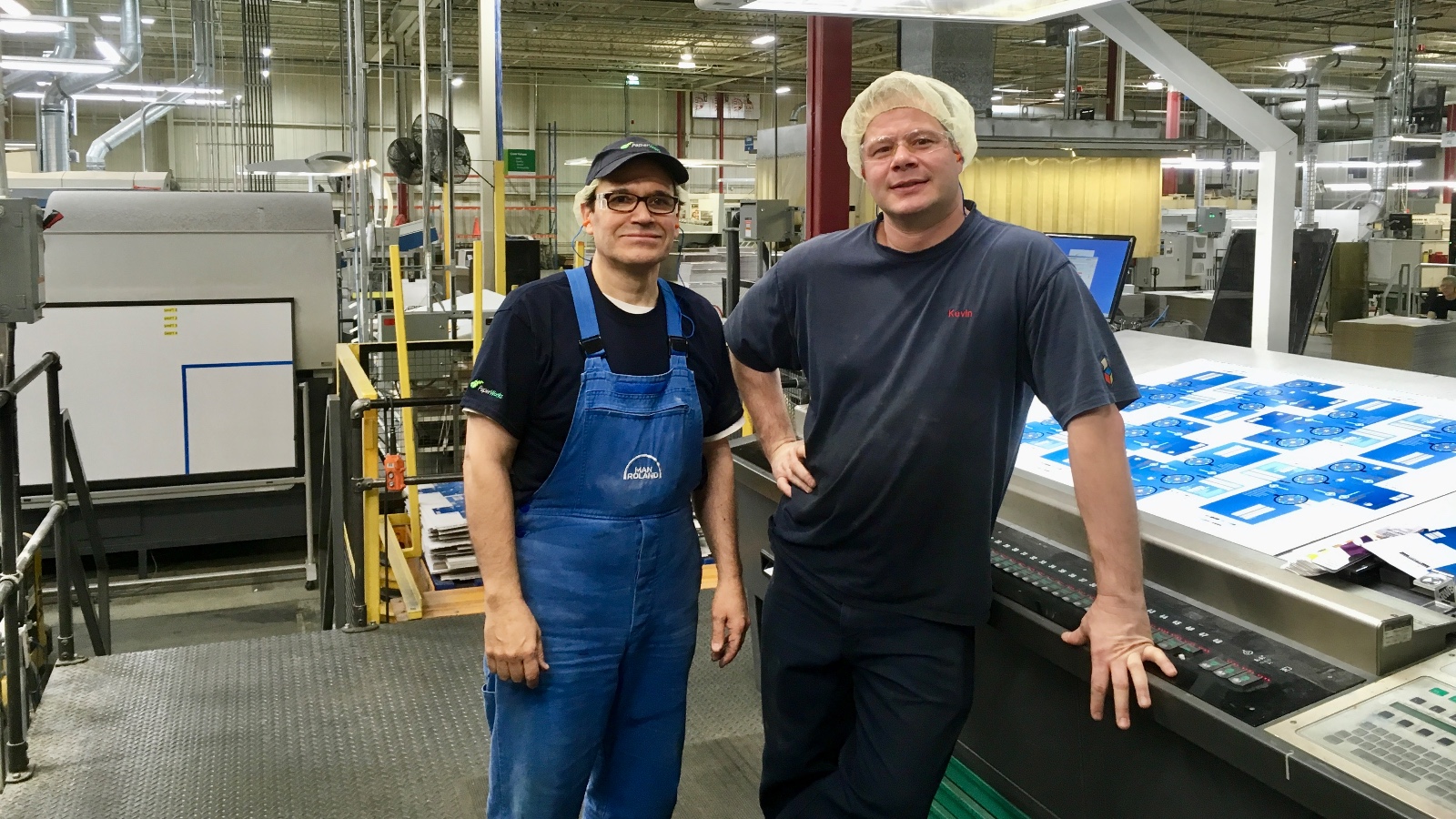
Kevin Benson. Team Leader at Paperworks. Kitchener. ON. Canada




Login
New User? Signup
Reset Password
Signup
Existing User? Login here
Login here
Reset Password
Please enter your registered email address. You will recieve a link to reset your password via email.
New User? Signup
Currency Exchange Graph