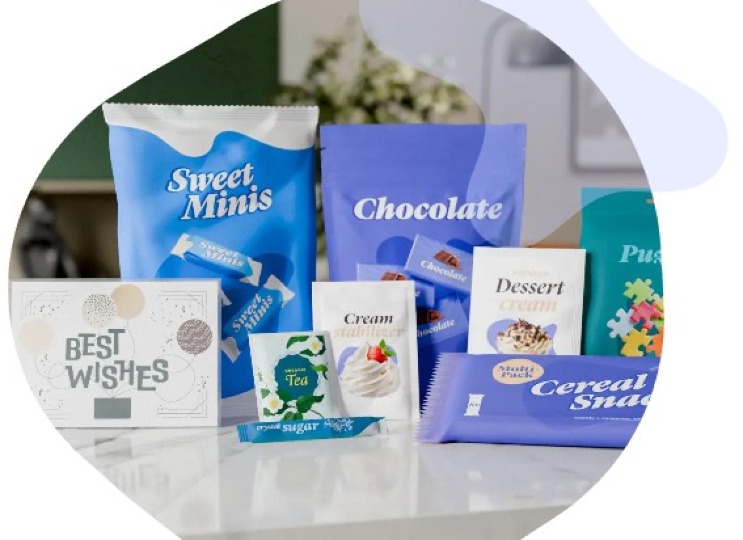
Sappi introduced what it describes as the market’s widest portfolio of heat-sealable papers, expanding its functional packaging range to help customers transition from plastic and composite structures to recyclable, fibre-based alternatives. The new Seal family is designed to meet increasing regulatory, customer, and brand pressures for sustainable packaging while maintaining reliable performance and total cost competitiveness.
The Seal portfolio includes Seal Silk, Seal G Silk, Seal Pure Silk, Seal Natural, Seal Light, and Seal Lucent, covering grammages from 44 to 110 gsm. The range offers multiple finishes and features, including OBA-free and translucent options, allowing customers to select a paper grade that fits their packaging format, visual requirements, and production setup. Sappi said the breadth of the range is intended to reduce risk for converters by enabling smoother integration into existing packaging lines.
Regulatory developments such as the EU Packaging and Packaging Waste Regulation are accelerating the move toward recyclable packaging across global markets. At the same time, converters and brand owners require stable sealing behaviour, strong mechanical strength, and materials that run efficiently on current equipment. According to Sappi, the Seal range was developed specifically to balance sustainability targets with practical production realities, making mono-material paper packaging a viable alternative to PE-coated papers and many plastic laminates.
Each grade within the Seal family supports different sealing strengths, print methods, and visual outcomes. Seal Silk and Seal G Silk are available in multiple grammages and support flexographic and gravure printing with low-to-medium water vapour performance, depending on grade. Seal Pure Silk offers an OBA-free option for customers seeking a natural appearance or specific compliance requirements, while Seal Natural is engineered for strong sealing strength and hot-tack performance.
For lightweight applications, Seal Light Gloss and Seal Light Natural provide heat-sealable performance at lower grammages, with Seal Light Natural also available as an OBA-free option. Seal Lucent adds translucency for applications such as window packs or partial product visibility, supporting both functional and aesthetic packaging designs.
“We’re seeing brand owners, converters, and printers look for reliable ways to change their packaging without adding risk or cost,” said Michael Bethge, Sales Director Flexible Packaging at Sappi. “They need practical choices rather than one fixed solution, along with technical support during the transition. The Seal range reflects that feedback and gives customers a broad set of options.”
All Seal papers are designed for consistent sealing, smooth runnability, and strong mechanical performance to support stable processing and safe transport. The papers also deliver accurate print reproduction, helping brands maintain shelf impact. Sappi supports customers during trials by providing guidance on sealing temperatures, dwell times, and machine settings tailored to specific equipment and applications.
The Seal range is suitable for both primary and secondary packaging where low-to-medium barrier performance is sufficient. Typical applications include confectionery multipacks, pillow bags, sachets, stick packs, doypacks, stand-up pouches, and other food and non-food products requiring secure sealing without complex barrier structures. Designed as mono-material solutions, the papers are recyclable in the paper waste stream when appropriate collection and sorting systems are in place.
With more than a decade of experience in functional paper development and close collaboration with customers and OEMs, Sappi positions the Seal portfolio as a practical path toward recyclable packaging that balances sustainability goals with performance, efficiency, and cost control.

Proofed (Human)

Listen to This Article

Loading...

Login
New User? Signup
Reset Password
Signup
Existing User? Login here
Login here
Reset Password
Please enter your registered email address. You will recieve a link to reset your password via email.
New User? Signup
Currency Exchange Graph