
There is nothing casual about taste.
What we experience with a product like Hershey’s is not just flavour—it is a memory that becomes stabilized over time. A precise sensory reference repeated so consistently that it becomes part of one's identity.
This contract embodies the brand’s implicit promise: to deliver an experience that creates lasting memories. Not written. Not negotiated. But profoundly understood.
Within that contract lies an expectation, rarely stated but universally felt—what we know should remain unchanged.
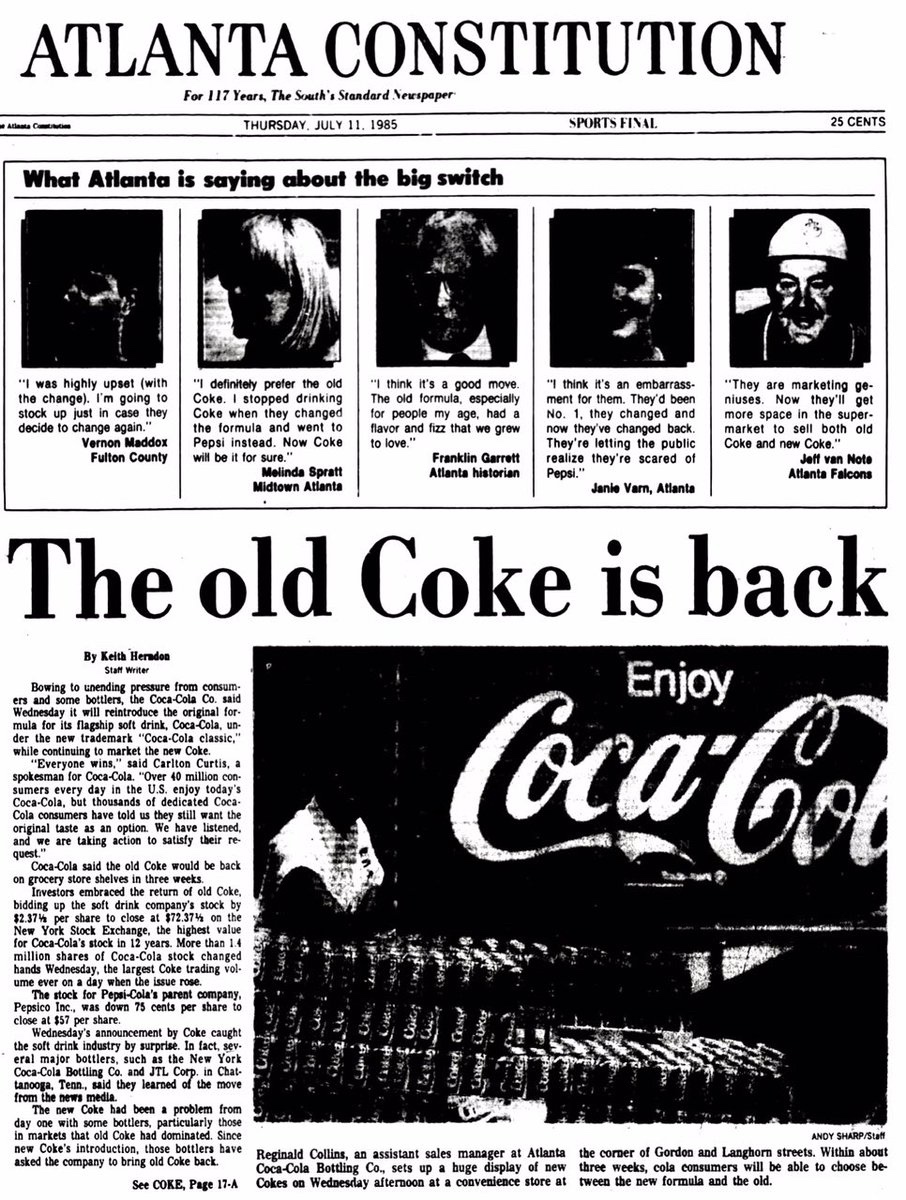
In 1985, The Coca-Cola Company reformulated its signature product, driven by data, blind tests, and competition.
It failed.
The new formula didn’t fail due to its quality, but because it broke a memory. In 79 days, the company changed its approach.
The lesson: a brand isn’t something to optimize, but a reference point to preserve.
The parallels today are clear. The backlash over Hershey’s ingredients—from Brad Reese and consumers alike—is expected. This is behaviour that is well-documented.
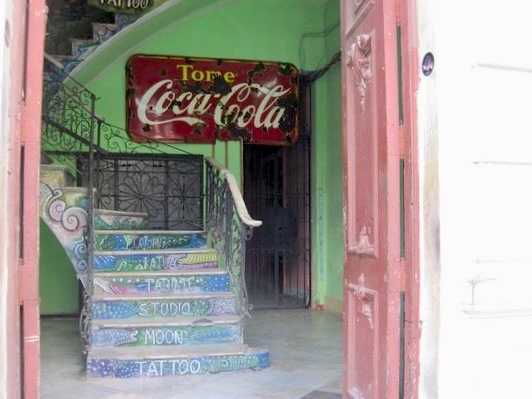
If New Coke uncovered the emotional cost of reformulation, Cuba demonstrated the structural cost.
There was a time when taste clearly matched geography. Coca-Cola started bottling in Havana in 1906—one of its early international expansions. For 54 years, until 1960, Coca-Cola operated in Cuba, combining production, distribution, and ingredient sourcing into a unified system.
This goes beyond being just a historical fact. It functions as a symbolic anchor—a reminder that formulation, supply, and culture were in harmony.
It's no coincidence that the "Cuba Libre" originated in Havana in the early 1900s. A simple combination—rum, cola, lime—yet it seamlessly blends global branding with local roots.
Then, that alignment broke apart. After the Revolution and embargo, Coca-Cola exited Cuba. The system endured—it restructured itself. Products adapted. Identities splintered.
Taste does not develop on its own; it is shaped by constraints. Politics reshape supply chains. Economics alter inputs.
A geopolitical shift triggers reformulation.
When Cuba stopped shipping cane sugar to the US, options were shaped by structure. Domestic corn, supported by policy and scale, led to the production of high-fructose corn syrup.
Cocoa price fluctuations influence substitution. Procurement then follows.
These are systemic responses, and they create a dilemma: economic gains are subtle, but sensory losses are felt immediately.
And in that imbalance, the brand absorbs the cost—consumer trust drops when sensory experiences are diminished, even if economic reasons are not obvious.
Politics imposes constraints that rarely benefit products. They alter supply chains, modify ingredients, and quietly erode the integrity consumers expect.
Consumers might not recognize the specific chemistry, but they notice the difference. Mouthfeel varies. Sweetness is deliberately adjusted. The finish feels different.
These aren’t just technical details; they signal a deviation. In calibrated systems, deviation is never harmless. It builds up. As the reference shifts, trust diminishes.
A common corporate belief is that small changes go unnoticed. That belief is mistaken.
Coca-Cola’s “New Coke” reversal
Persistent preference for cane sugar formulations
Rejection of “chocolatey” substitutes over real chocolate
Ongoing demand for products that retain original sensory profiles
Attributing the backlash to a single voice—even one with lineage—ignores decades of evidence. The response is collective, and we expect a reaction.
The evidence is clear: repeated product changes across industries have historically caused strong negative reactions, demonstrating that disruption of familiar experiences predictably harms customer trust.
It is the expected consequence of a system prioritizing efficiency, flexibility, and adaptation over stability. History has documented this pattern.
From Havana to Atlanta, from cane sugar to corn syrup, from original recipes to engineered alternatives, the trend is evident.
The reaction to Hershey’s decision is not an anomaly.
Consumers do not resist change indiscriminately.
A brand is not defined by what it produces, but by what it preserves and refuses to change—this consistency forms its strongest bond of trust.
Jan Sierpe is a Print Media Technologist, G7® Expert, and Lean Manufacturing consultant with 35+ years in packaging and commercial printing. He helped pioneer VistaPrint's Windsor facility and has since trained 500+ press operators, championing human capital as the engine of manufacturing excellence.

Proofed (Human)

Listen to This Article

Loading...

Login
New User? Signup
Reset Password
Signup
Existing User? Login here
Login here
Reset Password
Please enter your registered email address. You will recieve a link to reset your password via email.
New User? Signup
Currency Exchange Graph