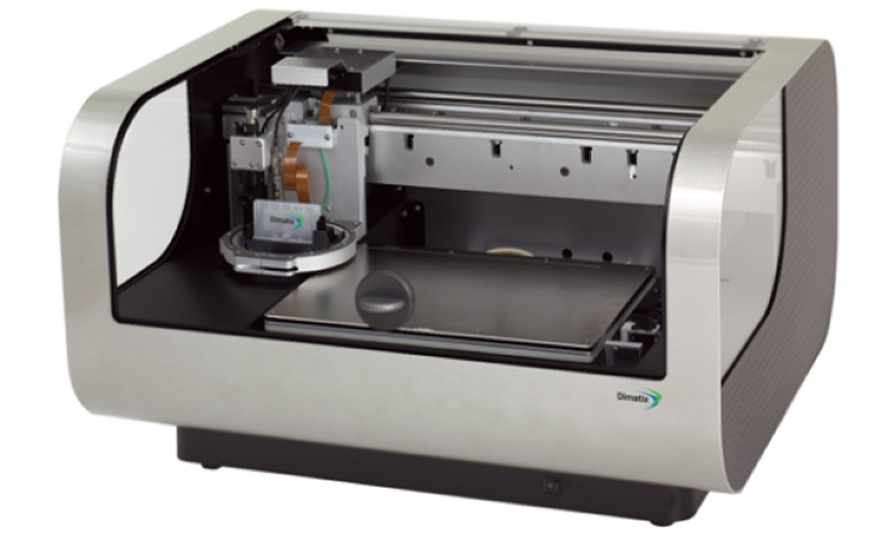
The DMP-2850 S is designed to support micro-precision inkjet deposition for research applications spanning electronics, life sciences, and advanced materials. The system can jet functional fluids onto plastics, glass, ceramics, silicon, and flexible substrates such as membranes, gels, thin films, and paper, making it a versatile platform for academic and industrial R&D environments. By combining precision jetting, materials analysis, and process control in a compact benchtop format, the printer enables researchers to shorten development cycles and reduce the cost and complexity of early-stage experimentation.
Key upgrades in the DMP-2850 S focus on workflow efficiency and ease of use. Enhanced software introduces integrated drop analysis and waveform optimization tools that help users fine-tune jetting performance without requiring deep expertise in drop watching or waveform design. A new print job management feature allows users to save complete job settings and batch multiple jobs into a single run, supporting unattended operation. Hardware improvements include a more powerful onboard CPU, increased storage capacity, and additional USB ports, enhancing overall system responsiveness and data handling during extended research sessions.
At the core of the system is FUJIFILM Dimatix’s Samba®-based print cartridge, built using Silicon MEMS processing and sputtered PZT technology to deliver consistent droplet formation and repeatable results. The platform supports a broad range of fluid chemistries, including UV, aqueous, solvent, acidic, and basic formulations, enabling experimentation across diverse application areas such as printed electronics, biological patterning, and materials science. With the DMP-2850 S now shipping, FUJIFILM Dimatix reinforces its role as a key technology provider for inkjet-driven research and next-generation product development.

Proofed (Human)

Listen to This Article

Loading...

Login
New User? Signup
Reset Password
Signup
Existing User? Login here
Login here
Reset Password
Please enter your registered email address. You will recieve a link to reset your password via email.
New User? Signup
Currency Exchange Graph