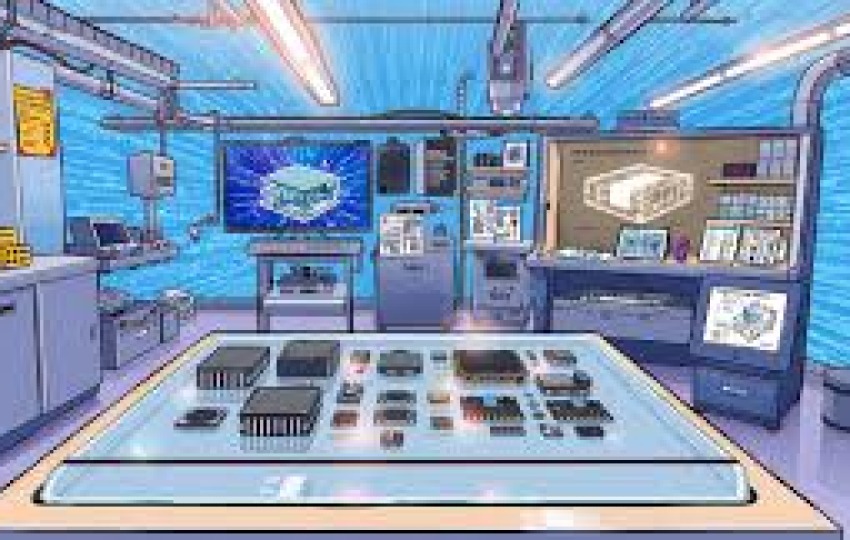
IDTechEx released new analysis examining how electronic adhesives and thermoforming are enabling the next generation of in-mold electronics (IME). Detailed in its latest report, In-Mold Electronics 2025–2035: Forecasts, Technologies, Markets, the research outlines how IME is moving from niche innovation toward broader commercial adoption across multiple industries.
IME replaces traditional rigid printed circuit boards with electronics that are formed directly into three-dimensional structures. Conductive traces are first printed onto a flat substrate, followed by the application of electrically conductive adhesives and surface-mounted components. The structure is then thermoformed using heat and pressure before being encapsulated through injection moulding. The result is a lightweight, integrated electronic part that combines structure, interface, and circuitry in a single component.
According to IDTechEx, this approach offers several advantages over conventional PCB-based designs, including reduced material consumption, lower waste, and simplified assembly. However, the embedded nature of IME introduces new manufacturing challenges, particularly around maintaining component integrity during thermoforming and injection moulding, and achieving consistently high production yields.
Looking ahead, IDTechEx forecasts that functional inks and adhesives will represent the largest cost element in IME components by 2035, accounting for roughly 21 percent of total part cost. This is largely driven by the continued reliance on silver-based conductive inks and the volatility of precious metal pricing. The report also references broader advances in conductive ink technology that could influence cost and performance over the next decade.
From a market perspective, the automotive sector is expected to dominate IME adoption. By 2035, IDTechEx predicts that more than 70 percent of IME revenue will come from automotive applications, driven by demand for lightweight interiors, integrated controls, and advanced human-machine interfaces. Control panels for industrial and home use are forecast as the second-largest segment, followed by white goods, with medical devices, wearables, and aerospace representing smaller but growing opportunities.
The report also highlights emerging process innovations such as laser-induced forward transfer (LIFT), which could eventually replace traditional screen printing of conductive inks. LIFT offers the potential for greater customization and pattern flexibility without the need for physical masks, opening new possibilities for bespoke IME designs.
Overall, IDTechEx concludes that in-mold electronics sits at the intersection of printed electronics, materials science, and advanced manufacturing. As adhesives, inks, and forming technologies continue to mature, IME is poised to play an increasingly important role in the design, manufacture, and integration of electronic functionality into next-generation products.

Proofed (Human)

Listen to This Article

Loading...

Login
New User? Signup
Reset Password
Signup
Existing User? Login here
Login here
Reset Password
Please enter your registered email address. You will recieve a link to reset your password via email.
New User? Signup
Currency Exchange Graph