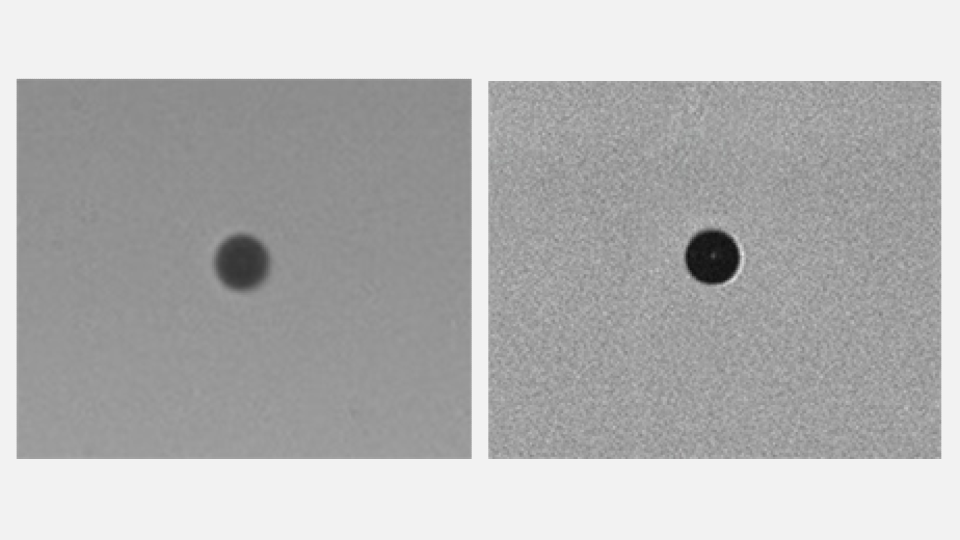
Meteor Inkjet unveiled its latest DropWatcher optics, a significant upgrade to the company’s established droplet observation and measurement systems used in industrial inkjet development. Earlier versions relied on long-exposure synchronisation between the strobe and the printhead firing frequency, producing averaged images that could obscure variations in droplet velocity and trajectory. These limitations made it difficult to reliably assess drop volume or identify dynamic behaviours such as ligament breakup and mist generation, particularly when drop jitter was present.
The new DropWatcher optics feature a high-intensity strobe with addressable pulse outputs, a fixed objective lens, and precise exposure control for both the strobe and the camera. This configuration enables precise single-event imaging that reveals how nozzle-to-nozzle variation, firing cycles, print frequency and ink chemistry influence droplet and satellite formation. The system can visualise femtolitre-scale drop sizes, enabling developers to identify and reduce misting by adjusting waveforms. Minimising mist formation helps prevent nozzle plate wetting and reduces print defects, improving overall system stability.
Beyond dynamic drop behaviour, the enhanced optics allow users to examine the first drops ejected after idle periods ranging from microseconds to hours. Issues such as partial drying or incomplete nozzle fill can be identified and addressed using tickle pulses or pre-pulses in the waveform. According to Meteor, these adjustments can decrease maintenance cycles, reduce substrate waste and contribute to more sustainable operation.
“With our new DropWatcher optics, you can see and measure droplet behaviour with a level of precision that simply wasn’t possible before,” said Jonathan Wilson, Meteor’s Vice President of Sales. “This breakthrough enables our customers to fine-tune their print systems with unprecedented accuracy, leading to measurable improvements in print quality, process reliability, and efficiency.”

Proofed (Human)

Listen to This Article

Loading...

Login
New User? Signup
Reset Password
Signup
Existing User? Login here
Login here
Reset Password
Please enter your registered email address. You will recieve a link to reset your password via email.
New User? Signup
Currency Exchange Graph