WHY THE trUMP ADMINISTRATION DON'T MIND CHAOS
For Union workers and other true believers (MAGA), April 2nd is now known as ‘Liberation Day.’ Imposing tariffs on US businesses and Americans is rarely seen as good, but in this case, Trump is trying to sell it to the Americans as a win. The stock prices indicate that investors are of another belief, and some Republicans even say it must hurt before it gets good again.
After a few days, some of the tariffs were put on a 90-day pause, but in this article, I will elaborate on why tariffs and a new economic world order are on Trump's agenda.
Trump wants to make America Great Again, but remember that the US is the biggest economy in the world with the highest GDP per citizen. The US's GDP is bigger than all other countries except Europe, China, Australia, and Japan.
Some say that Trump has no grand master plan, but some sources question that. The Project 2025 plan is a 922-page Conservative wish list written by the Heritage Foundation, describing almost everything the administration should do, and it is nearly followed by the letter in the executive orders already delivered by Trump. Some executive orders can be found in the Project 2025 plan, and others in the Trump's Agenda47 campaign manifesto. People like Curtis Yarvin, who is close to a couple of tech billionaires, J.D. Vance, and more, publicly describe how the US should be democratically changed to a monarchy where the president acts like a CEO of a massive corporate.
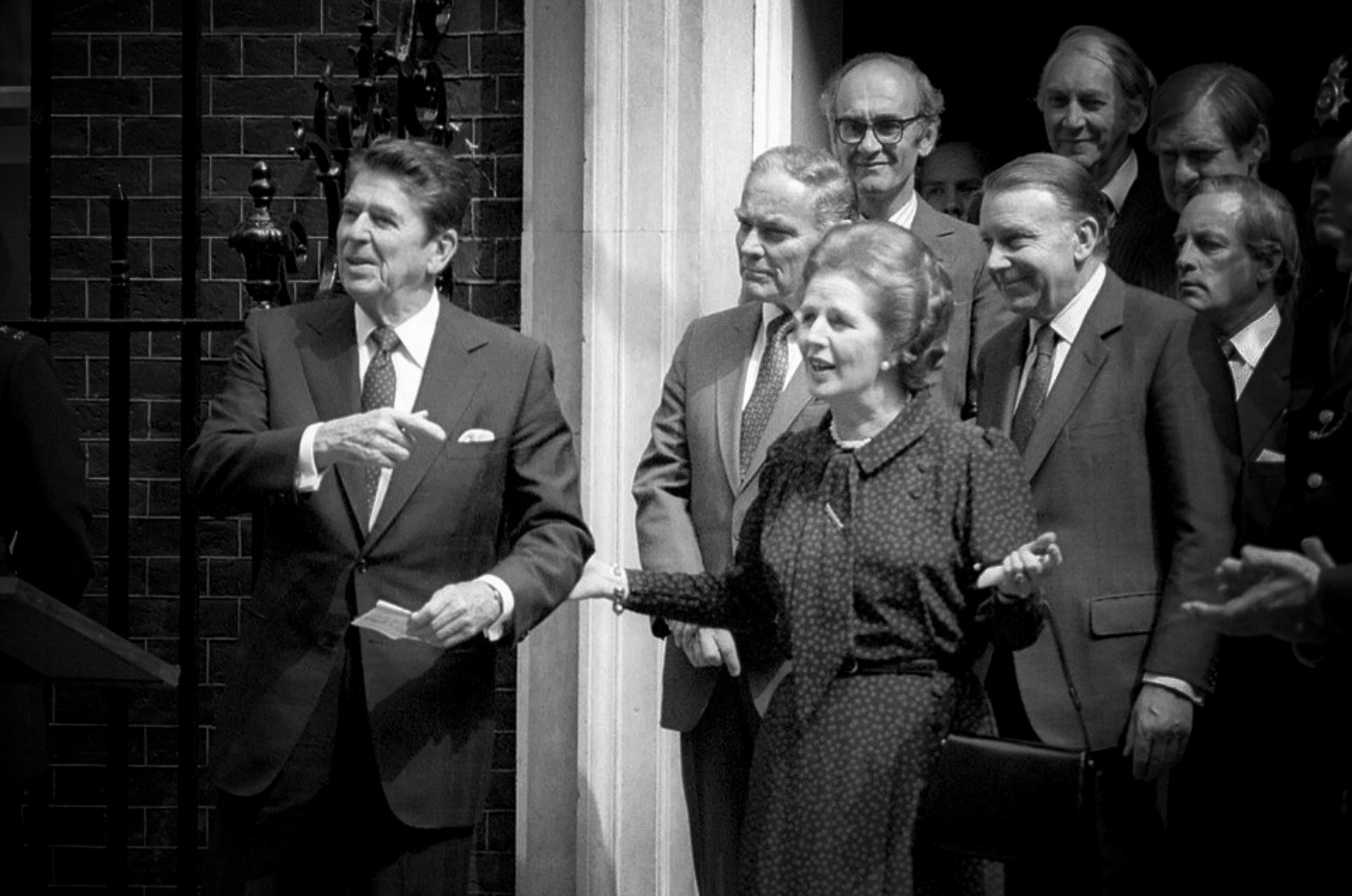
Dr. Joeri Schasfoort describes how the master plan is to change global trade. In a fascinating YouTube film, he explains how the US two times earlier changed how international trade was conducted to secure various US interests - first, the Bretton Woods System was introduced after WW2 that, among other things, led to the foundation of NATO and the Japanese security treaty. The second paradigm change happened in the early ‘80s when British PM Margaret Thatcher and US President Ronald Reagan introduced the Neoliberal World Order, which essentially is the paradigm globalization has worked under since. Until then, the dollar as a global currency reserve was secured with gold. In 1971, President Nixon suspended the convertibility of dollars to gold. The Neoliberal World Order gave the world low or zero tariffs, flexible currency exchange rates, and capital could move freely. Finally, the US would use its military power to police the world for those who supported the system - leaving very few countries out.
The two previous systems, as well as the new one Trump is introducing, are based on dividing countries into allies, neutrals, and enemies - and, based on status, will give them access to military protection and access to American consumers with low or zero tariffs. It’s a long story to explain why these two paradigms have worked very well for the world and, at the same time, made the US the world's largest economy, but I can recommend watching the YouTube mentioned above to get a deeper insight. However, it concerns currency, security, and much more. The essence is that we see tariffs create global chaos that shall lead to bargaining.
Newspaper headlines on the weekend after “Liberation Day” already describe how more than 50 countries have requested negotiations. China's response was swift. Europe has still not come up with an answer but is likely to follow through with Canada and impose countermeasures on a level with the US.
Trump wants a weaker dollar, and the countries that essentially tie their local currencies to the dollar will benefit the most. The countries earlier referred to as allies are now described as vassals in the New World Order. [a state with varying degrees of independence in its internal affairs but dominated by another state in its foreign affairs and potentially wholly subject to the dominating state.] This is essential to understand. Donald Trump does not define politics himself but by two recognized economists now part of the US Administration: Secretary of Treasure Scott Bessent and Stephen Miran. Stephen Miran has written “A User’s Guide to Restructuring the Global Trading System,” a 38-page document describing Miran’s view on currency, trade, and how the US needs to regain control.
So why is the US Administration interested in politics that, at least initially, will hurt Americans in the short term and potentially lead to higher inflation, a slowdown in the economy, and recession?
David Rosenberg, who made these predictions to Bloomberg, harshly described the consequences for the American economy, even before the tariffs were in effect.
He is essentially shooting down almost every statement from the Trump administration that this is good. Still, he may forget one thing—and as much as Beset’s and Miran’s views are political, so are David Rosenberg's.
Trump wants the US to be a production country that can manufacture its goods. The deindustrialization since the ‘50s has made the US a third of the size of then, falling from an index of 37 in 1950 to 10 in 2024), and today, both Germany, Japan, and, most importantly, China are much bigger industry nations. The size of your industry relates to how fast you can mobilize military power in case needed—and here, Taiwan plays a role. JD Vance explains that China has produced more ships in one year than the US since WW2.
Industrial capacity is vital for the defense industry and creates much work. In another YouTube film, also by Dr. Joeri Schasfoort, he explains how the size of the military plays an equal role as private corporates in measuring GDP (under many different conditions). Schasfoort also describes how military production equally improved GDP and only inflation if the industrial capacity is limited. In the US, the industrial capacity is close to its limits, not the same in Europe, and he even claims that Europe will be more prosperous without the US and that our industrial capacity can manage massive growth and for Europe to secure both welfare and increased military activities.

So, in short, the Trump administration intentionally created chaos to force everyone to the negotiating table. The Trump administration wants to collaborate with each country about tying their economy to the US, so the dollar exchange rate can’t be controlled artificially by, i.e., obtaining large currency reserves. The tariffs are one thing, but the US will also look at non-tariffs measures that the administration believes are damaging the trade deficit. In Europe, for example, they aim at the VAT system as a factor. In China, they will look for the artificially low RMB exchange rate, and more of these measures will be used to decide which group the country is in (vassal, neutral, or enemy).
Let’s play: If the Trump administration succeeds in a vassal negotiation, and the tariff is mutually set to 10%. They will make the same bet as they did under the previous Trump administration that the producers will cover the 10% tariff by lowering prices or that the seller country's currency will be min. 10% weaker and therefore not lead to any price changes in the US, but the government will achieve 10% income via tariffs - precisely as they have promised the population.
The trading countries will not only be the ones that directly or indirectly pay the tariffs, but they will also face another significant challenge. The inspiration for weaker dollars comes from when major countries decided together with Japan to weaken the Yen. This has led to years of low growth and stagnation in Japanese society—yet this is what the US wants, and here is why.
If the US should be a production country, it can not lower the salary by 60-70 percent, so it needs to do something else. If 70% of the economy comes from products and services not influenced much by international trade, a weaker dollar and lower taxes will allow Americans to make the “same” in dollars as before the New World Order. Americans will only feel the pain when traveling abroad.
As I read it, the big losers will be China and the European Union, as we can’t and won’t become a vassal of the US. We will see a tariff, probably in the range of 10%. Then, we will see a dollar at a considerably lower level, maybe 20-30% lower, which essentially will limit EU and Chinese exports a lot in the beginning, for hereafter to be absorbed as the cost base.
As Ursula von der Leyen said a few days ago, “The US is only about 22% of our economy so that we will focus more on the 78%." This is the logical answer, and we can see that bilateral agreements between countries are already rising.
---
In your business, cost plays a significant role, and when companies source products, we source where it’s cheaper and/or better or is better for the supply chain. We trade in US dollars, and in daily life, most of us probably think a lot about currency exchange rates but not so much about what influences the exchange rates.
However, if locally sourced products are sold favorably because of lower exchange rates, this creates unfair competition. Western governments have for years criticized China for keeping its exchange rate low. With a low exchange rate to the dollar, it will be cheap to export and expensive to import!




Login
New User? Signup
Reset Password
Signup
Existing User? Login here
Login here
Reset Password
Please enter your registered email address. You will recieve a link to reset your password via email.
New User? Signup
Currency Exchange Graph