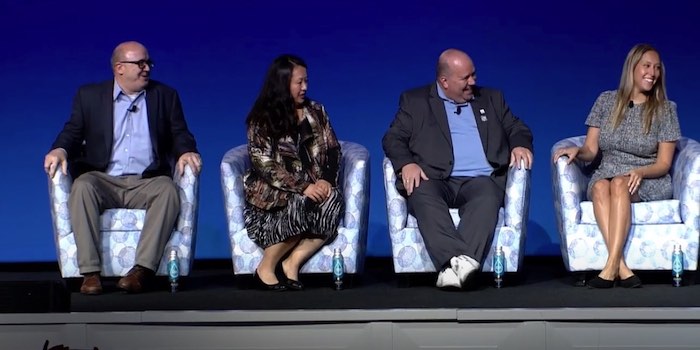
EVENT - As suppliers become more experienced in organising their own events, true alternatives to the regular fairs/events are emerging. The Industry Experts Panel during the EFI Connect 2022 event is a good example. What do the experts say?
EFI CRO (which stands for Chief Revenue Officer) Frank Mallozzi welcomed a group of industry analysts and press people (from left to right in the header photo) - Tim Greene of IDC, Linda Casey of Packaging Impressions, Morten Reitoft of INKISH and Adrienne Palmer of Big Picture magazine - to talk about the future of the industry in all its diversity.
For those who do not want to read (further): watch the above video for approx. 35 minutes
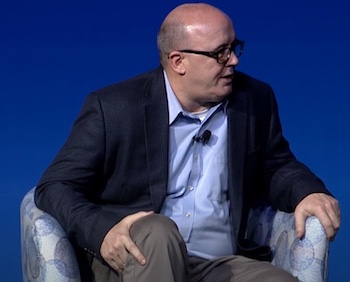
Tim Greene: "The search for new possibilities and opportunities was clearly visible in 2021. Technically, everything can be printed on everything, so the search is very broad for everyone. We at IDC try to map these movements, so companies can come to us to better assess their opportunities. 2021 showed a big increase in demand for those kinds of consulting services."
Linda Casey: "I think 'just-in-time' will become the norm in 2021, especially in packaging. That's playing out throughout the chain, combined with a changing view in the use of packaging within marketing and therefore the positioning of brands."
Morten Reitoft: "In preparation for this session, I looked at the most popular articles/videos on both inkish.news and inkish.tv. One of the most striking and widely read news items was around the failure in 2021 of the acquisition of Gallus by Benpac. It was a €120 million 'mistake', in which Heidelberg had apparently done too little research into the buying party. Secondly, I would like to emphasise that Corona was and still is a stressful period for many people in the industry. In 2021, the entire industry started to 'think over' new business models, new (online and hybrid) events, new product introductions. In the current (perhaps already) post-corona period, I see no signs that we are going 'back' to the period prior to this global pandemic."
Adrienne Palmer: "Companies have mainly learned to make their processes 'lean & mean'. Corona has therefore ensured that many companies have a clearer awareness of all the processes within companies. I have also seen that the tendency to collaborate more has increased significantly."
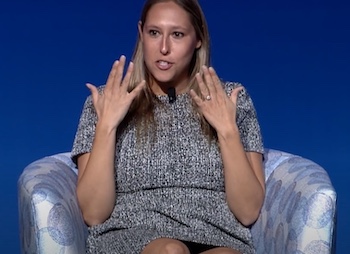
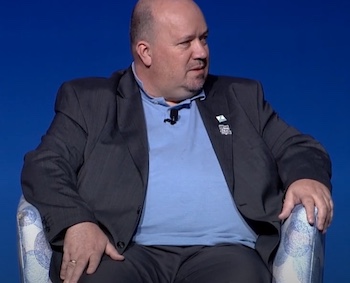
Morten Reitoft: "Actually, that question is hard to answer. However, I can say that the meaning of 'digital transformation' is more and more pervasive in really all processes. In doing so, we have to be very aware that we especially have to take the people involved with us and support them in the places where they are going to fulfil their new functions. In this respect, the shortage of professional people, the ageing population and the fear of losing one's job within companies that are going through a major automation process, obviously play a role. Employers must realise this kind of transformation in close cooperation with their employees. Finally, I would like to emphasise that we must answer the question of why we automate. Is it about the pure numbers (what do we make in what time at what cost and with what profit) or is it about adding value to the process and positioning your customers? And, of course, within a solid cost model and a sales price model that can be adjusted accordingly. This industry simply has to make more money to meet the changing demands of the market."
Reitoft: "Usergroups are a good way of exchanging experiences around workflow software."
Adrienne Palmer: "Soft signage is defined as the use of soft materials for graphic display. In other words, the process of digitally printing textiles is soft signage at its best and involves many different types of fabric being printed on for a variety of applications, such as clothing, banners, flags, and more. I see that as a growing business within print companies, who can prepare for it with solid market knowledge."
Palmer: "Soft signage connects various out-of-home applications and POS materials; a huge opportunity for companies in sign applications."
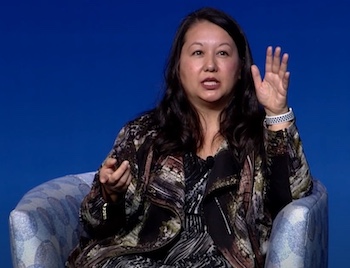
Linda Casey: "I have a very nice example of a local bar in London. This bar, of course, was also affected by the lockdown. The owners had a plan to pack the bar's beer with the snacks that were on the bar and to send along a vinyl record of a punk-rock band that was playing in the bar. All this was packaged in an attractive corrugated cardboard box, which if you were a regular customer living in London, was delivered to your home by the band members. In the pre-Corona era you just didn't see these examples."
Casey: "Digital printing techniques in the corrugated segment represent opportunities and possibilities for digital production companies that can get into the skin of brands that want an 'unwrapping experience' for their customers."
Tim Greene: "It's happening super fast now, pretty much all new invented applications are going to inkjet, no matter what. The whole business model of brands is changing rapidly and 'speed-to-market' can be done better and faster with inkjet. With inkjet, 'all-in-one' printing offers huge opportunities in markets that are just emerging. The beauty of it is that it is a non-contact technique, so almost any imaginable surface can be printed. That offers enormous flexibility. Whether you're printing cans or the façade of a building, the basis of the technology is the same."
Greene: "There is no application imaginable in which inkjet cannot achieve the desired result, in principle everything is possible. It's just a matter of matching format, heads, substrates and inks. It's fascinating."




Login
New User? Signup
Reset Password
Signup
Existing User? Login here
Login here
Reset Password
Please enter your registered email address. You will recieve a link to reset your password via email.
New User? Signup
Currency Exchange Graph