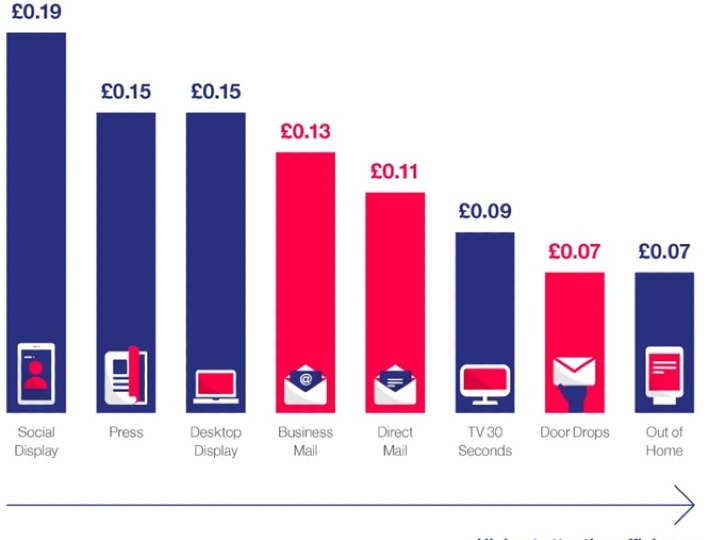
JICMAIL released the results of its landmark study, “The Time We Spend With Mail,” providing the first definitive measure of consumer attention to mail. The year-long program found that Direct Mail commands an average of 108 seconds of attention per item across a month, while Door Drops average 46 seconds. These findings demonstrate that the mail channel delivers higher attention efficiency than many competing media platforms, firmly establishing it as an essential element in modern attention-based media strategies.
To deliver robust insights, JICMAIL combined multiple methodologies across its 1,000-household panel, capturing time-spent data on Business Mail, Direct Mail, Door Drops, and Partially Addressed Mail. Independent validation came from AI-driven video analytics company Lifestream, while PwC scrutinized mail efficiency calculations to benchmark mail against other media. “Triangulating in on the truth using multiple data sources is an important step in contemporary media research,” said Ian Gibbs, JICMAIL’s Director of Data Leadership and Learning. “The close alignment between panel results and video analytics validates our approach and the strength of our methodology.”
Mark Cross, JICMAIL’s Engagement Director, emphasized the implications for planners: “The journey of mail around the home accumulates unparalleled levels of largely solus attention, triggering multiple minutes across the marketing funnel. Rewarding the time spent with mail is now a key planning metric.” Following the study, JICMAIL convened a roundtable of leading brands and agencies, including Boots, Virgin Media O2, and Havas, to explore the findings. Their collective insights have been published in the JICMAIL Attention Manifesto, offering guidance for integrating attention-based planning into the broader media ecosystem.

Proofed (Human)

Listen to This Article

Loading...

Login
New User? Signup
Reset Password
Signup
Existing User? Login here
Login here
Reset Password
Please enter your registered email address. You will recieve a link to reset your password via email.
New User? Signup
Currency Exchange Graph