In an era of digital transformation, one newspaper professional's dedication to print excellence reveals what we risk losing—and why the craft of creating beautiful newspapers still matters—a meditation on quality, pride, and the enduring power of newsprint done right.
I read the electronic version of The New York Times every day, but occasionally, I visit the public library to hold and read the actual newspaper. It's become a ritual for me—there's something irreplaceable about diving into well-written articles on newsprint, feeling the weight of a publication designed to reach millions. Editorial articles feel timeless in print. Even when I read the Sunday edition days afterward, the content remains current and enduring. The elegant writing style and subtle humour that grace these pages are precious elements that somehow feel more substantial on newsprint.
This habit took on new meaning after an encounter that fundamentally changed how I evaluate newspapers. During my career at newspapers across South America, including ABC Colour in Asunción, Guyana Times in Georgetown, La Tercera in Santiago, and O Globo in São Paulo, I focused on improving printing quality and reducing waste. But it wasn't until I met Espiridión González at El Universal in Mexico City that I truly understood what print excellence could look like.
Espiridión had started working at the newspaper at a very young age and had risen to become operations manager. His dedication to the publication bordered on reverence. During a consulting visit in 1999, he and I spent hours comparing the design and layout of The New York Times with that of El Universal. What struck me wasn't just his technical knowledge, but his genuine pride in every aspect of the newspaper's production.
"Look at this," he said, methodically counting pages and pointing to various sections. "El Universal has more colour pages and full-page advertising than any other newspaper in the Americas—except maybe USA Today, but that's a tabloid." He wasn't boasting; he was presenting evidence. Page by page, he demonstrated El Universal's visual richness: double full-page ads, single full-page inserts, center spreads, and elaborate triptychs that transformed advertising into art.
His passion was infectious. Since that day, I've never looked at a newspaper the same way. Every publication became a testament to the dedication of people like Espiridión—professionals who understand that print quality isn't just about ink and paper, but about respecting readers enough to deliver excellence.
This perspective makes recent changes even more disheartening—particularly when it comes to The New York Times. For over a century, the Times has been the gold standard of American journalism, the "newspaper of record" that other publications aspire to emulate. Its Pulitzer Prize walls, its influence on national discourse, and it’s very masthead carry a weight that transcends daily news delivery. The Times isn't just another newspaper; it's an institution whose physical presence once commanded the same respect as its editorial content.
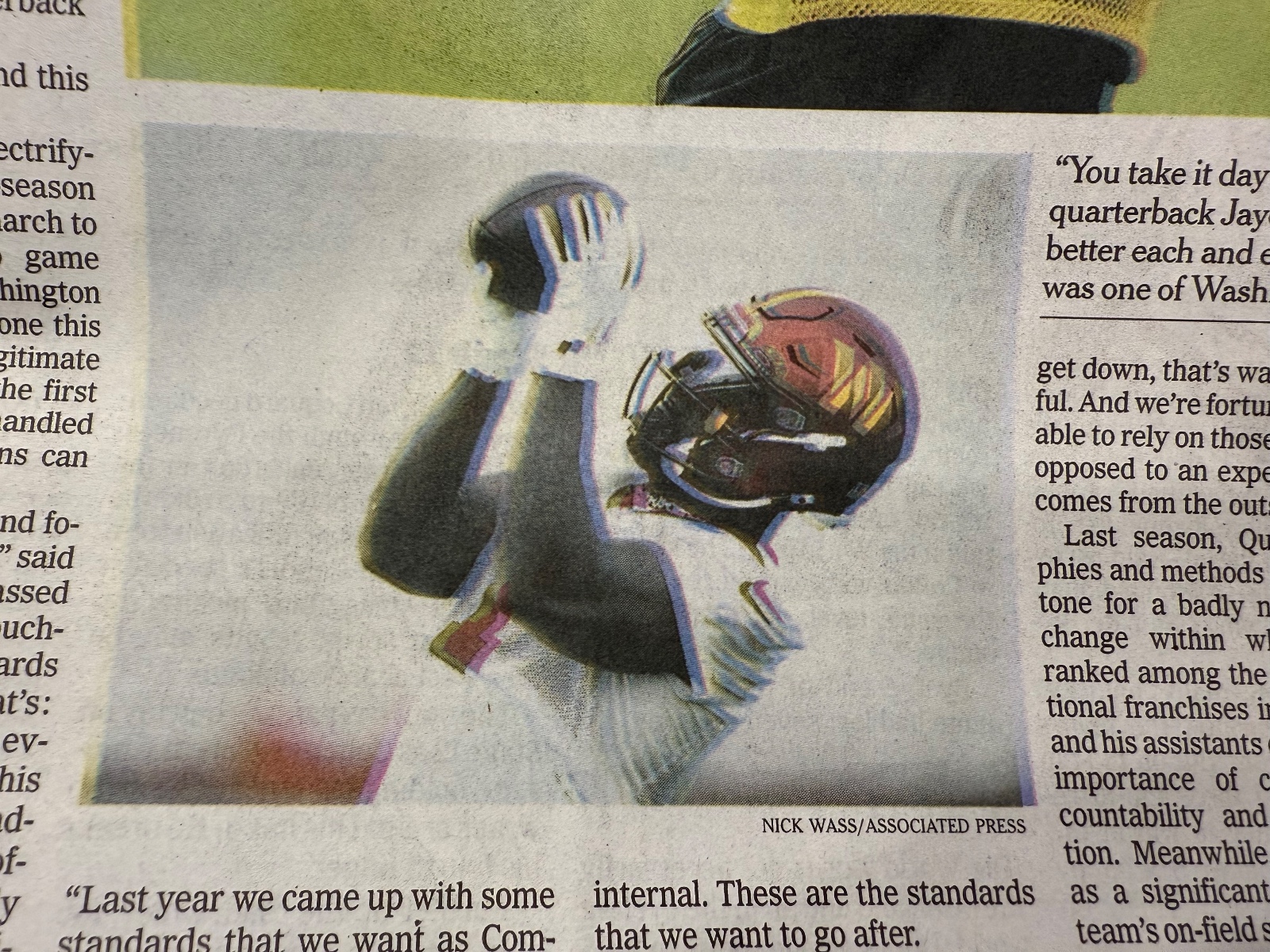
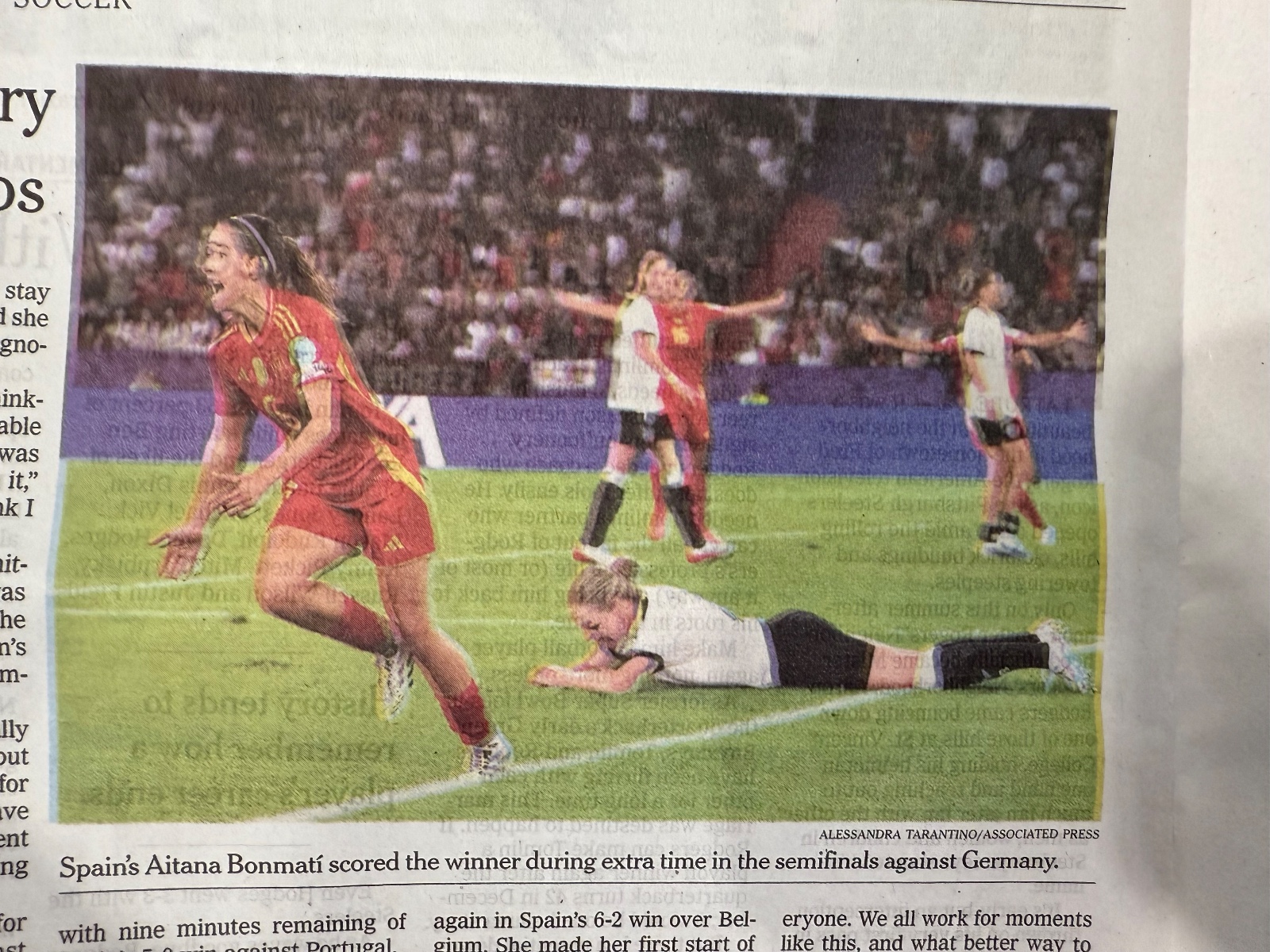
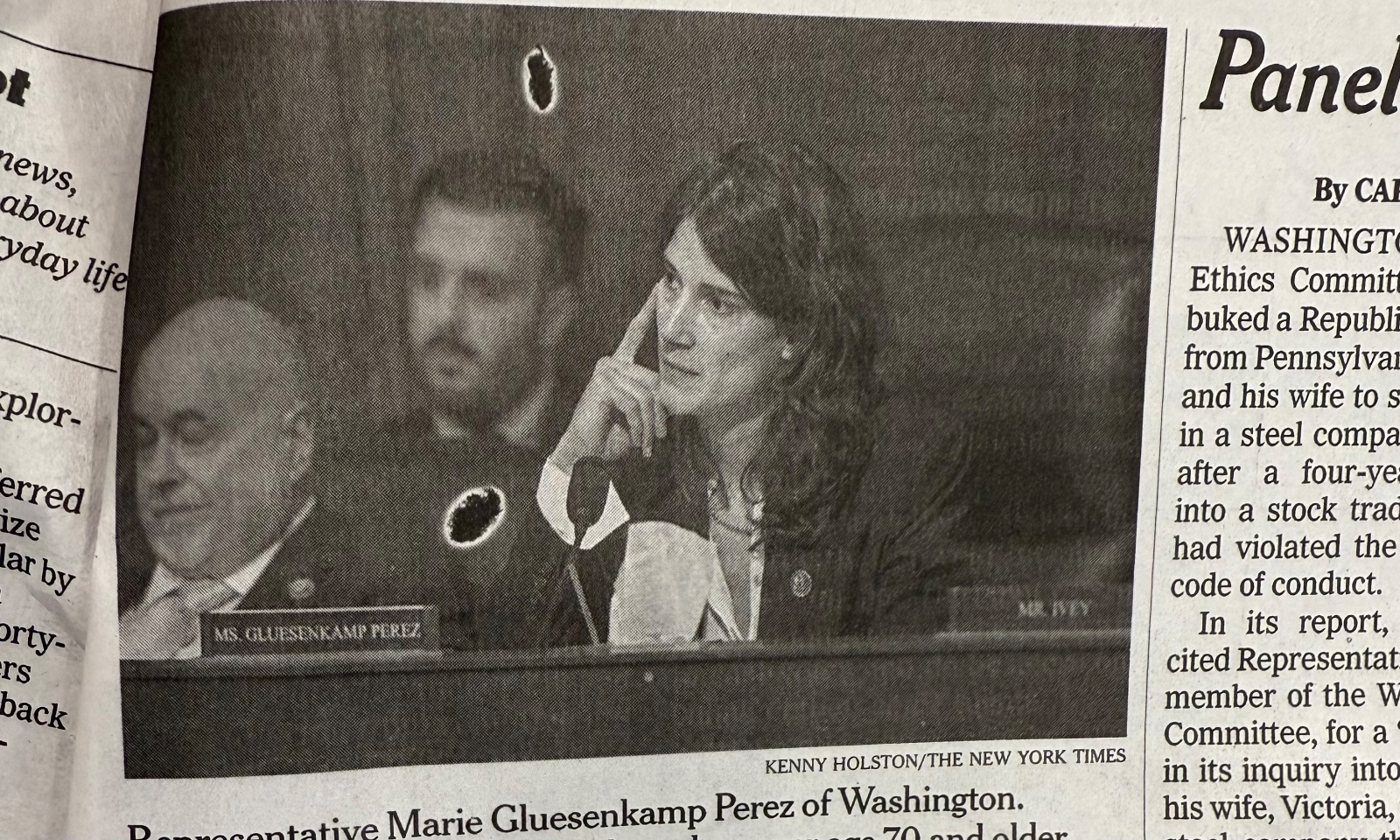
Years of observing newspapers through Espiridión's lens have trained my eye to notice what others might miss. Recently, when I picked up the Sunday edition at my local library, I was struck by how far this legendary publication's print quality has declined. The colour reproduction was so poor and out of focus that the photographs looked like they were meant to be viewed with 3D glasses. Headlines' edges blurred, and what should have been crisp, black text appeared gray and muddy. This wasn't just any newspaper—this was The New York Times, reduced to print quality that wouldn't have been acceptable at regional papers I worked with decades ago.
It's tough to stomach because the Times has always understood the power of presentation. This is the newspaper that pioneered Sunday magazine photography, making front-page design an art form and understanding how visual excellence reinforced editorial authority. When readers held a pristine copy of the Sunday Times, they weren't just consuming news—they were participating in a cultural ritual that the newspaper's physical quality helped sanctify.
I understand the brutal economics driving these changes. Digital subscriptions now dwarf print circulation, and every dollar spent on print production is a dollar not invested in digital infrastructure or reporting. But holding that degraded Sunday edition, I couldn't help but think of Espiridión and his meticulous attention to every colour page, every advertisement placement. He knew that print newspapers are more than information delivery systems; they're physical artifacts that represent a publication's commitment to quality—and by extension, its respect for readers.
Perhaps this decline is simply the natural evolution of a dying medium, but it feels like witnessing the slow dissolution of an institution that once set the standard for excellence. When The New York Times—the newspaper that foreign correspondents, politicians, and media professionals worldwide still regard as the pinnacle of American journalism—can't maintain print quality that would satisfy a local daily, it signals something deeper than cost-cutting. It suggests that even our most prestigious publications have accepted that physical newspapers are no longer worth the investment in excellence.
For those of us who still value the ritual of reading newsprint, this represents more than just declining craftsmanship—it's the abandonment of a principle. People like Espiridión understood that when you hold a newspaper, you're holding the institution's promise to its readers. Today's blurry, poorly printed Times feels like a broken promise, a signal that this legendary publication no longer considers its print readers worthy of the same standard that built its reputation.
Yet I remain hopeful. Somewhere in Mexico City, Espiridión González still approaches each day's production with the same reverence that first inspired me. Around the world, other craftspeople continue to understand that print quality matters—that the weight of newsprint in a reader's hands carries meaning beyond mere information transfer.
The ritual endures because it serves something fundamental in us. When I fold open that library copy of the Sunday Times, despite its flaws, I'm still participating in a tradition that connects me to millions of other readers across generations. The elegant prose, the thoughtful editorials, the carefully crafted headlines—these elements transcend print quality and remind us why newspapers became institutions in the first place.
Print will survive not because it's economically inevitable, but because it satisfies something digital cannot: the tactile connection between reader and story, the permanence of ink on paper, the shared experience of a physical artifact that families can pass around a kitchen table.
If there are people who understand this difference—people like Espiridión who take pride in their craft—newsprint will find a way to endure.
The question isn't whether newspapers will survive, but whether they'll remember what made them worth preserving in the first place.
____________
Jan Sierpe is a global press instructor and print media specialist with over 35 years of experience in the Americas, Europe, and the Middle East. He specializes in continuous improvement, process optimization, and waste reduction in areas such as security printing, packaging, labels, newspapers, and commercial printing. As a contributing writer for Inkish in Denmark, Jan analyzes trends in the printing industry, and his insights are published in multiple languages across international trade publications.
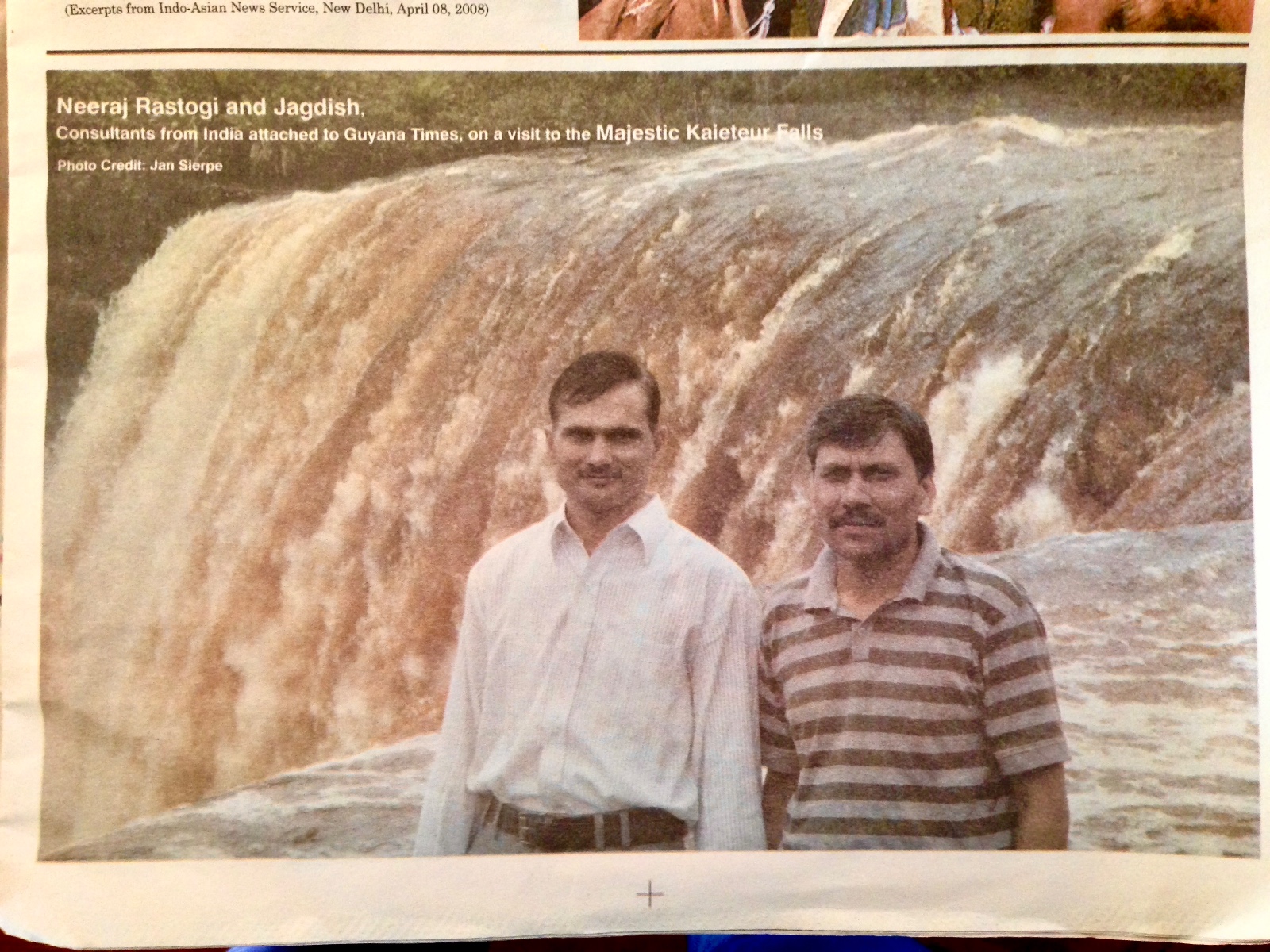
My friends Neeraj and Jagdish erected the press, and together we started it up and launched the Guyana Times, "The Beacon of Truth". Visiting the Kautear Falls, located on the Potaro River in the Kaieteur National Park, central Essequibo Territory, Guyana. Kaieteur Falls is about four and a half times the height of Niagara Falls.

Proofed (Human)

Listen to This Article

Loading...

Login
New User? Signup
Reset Password
Signup
Existing User? Login here
Login here
Reset Password
Please enter your registered email address. You will recieve a link to reset your password via email.
New User? Signup
Currency Exchange Graph