Right now, I am sitting in Cancún Airport, heading to Mexico City. I am working on an American-designed Apple MacBook in an American-owned franchise, TGI, ordering an American cheeseburger with Heinz ketchup and mayonnaise. And as I write, I am using AI—at first I assumed it was American, until I realized that Grammarly is actually Ukrainian. I have been in the U.S. 19 times in 2025 alone, and every single visit has been a joy: friendly people, amazing printing companies, and fantastic applications.
For decades, Europeans and Americans have built close relationships based on strong democracies, freedom of the press, and shared democratic values. And almost every time I speak with Americans about their origins, they proudly tell me about their roots and the countries they have visited to trace their family histories.
We have so much in common. Our values—and our cooperation—have made us stronger together. The U.S. has, for better or worse, acted as the world’s police force, and in almost every major conflict, Europeans have stood shoulder to shoulder with Americans in coalitions aimed at securing freedom and democracy for millions. Has this relationship been without friction? Of course not. Like any relationship, it has had ups and downs. But one by one, those challenges have been solved—so thoroughly that even the idea of excluding American technology from critical infrastructure never truly entered the public debate.
Now, suddenly, 29 pages have changed that dramatically. The U.S. government now seems to believe that Europe matters less than Russia, China, and other dictatorships. If Americans believe that Europeans are one country, one voice, one culture, they are wrong. If Americans think the EU is something forced upon us and should be dismantled in the name of far-right ideology, they misunderstand us profoundly.
American values like the American Dream are powerful—and when they work, they really work. But I don’t think many Europeans today believe in the American Dream anymore, unfortunately. You have built a society that many Europeans do not want to live in. That doesn’t mean we reject your right to choose your own system—just as we expect our right to choose ours to be respected.
I have spoken with people in the U.S. who asked me whether America shouldn’t be allowed to “change the playing field,” even if friends get hurt in the process. It’s a fascinating question—because before answering, one must understand the underlying logic. What is more valuable: the dollars themselves, or what you get in return for them?
If you invest millions in a printing press, you expect that machine to cover variable costs, salaries, overhead, CapEx, and still generate profit. That is not “ripping anyone off”; that is how capitalism works. Suppose a German company with decades of experience can sell a better solution at a lower price than a U.S. manufacturer. In that case, that is not exploitation—it is supply and demand, and the result of who builds the most competitive products and services in the world.
Why do I buy Apple products? Not because they are American - but because they serve me exceptionally well and help me achieve my professional goals. The logic is that simple, and it applies to every product we buy.
Does anyone honestly believe GM sources parts from Canada because they are Canadian? Of course not. They do it because it is more competitive, leads to a better product, and increases profitability. The entire idea of being “ripped off” is therefore a political narrative with minimal economic merit.
We all buy where we believe we get the best deal.
When Mark Andy claimed unfair competition, competitors almost unanimously responded that they were already the cheapest in the market. If customers still choose more expensive BOBST machines, it has nothing to do with being “ripped off”—it has everything to do with performance, quality, and long-term value. American companies themselves are choosing those machines.
The situation between the U.S. and the rest of the world is bizarre now. Old friends are suddenly labeled enemies. Former enemies are treated as friends—despite their lack of democratic legitimacy and their suppression of their own populations.
I never thought I would see America put “money first, democracy last.” Yet that is what we are witnessing under the current regime.
Fortunately, businesses and people continue to communicate, trade, and build relationships that still exist beyond political agendas—at least for now.
As Canada’s Prime Minister, Mark Carney, has clearly stated, what will most likely happen is this: the rest of the world will continue to globalize. The U.S. risks becoming the country that shuts itself out. That would be a tragedy—and I sincerely hope it will change.
Americans have resilience, creativity, and business instinct that the world needs. We need your ability to be first movers, to invest boldly in new technologies, and to turn those investments into even more innovation.
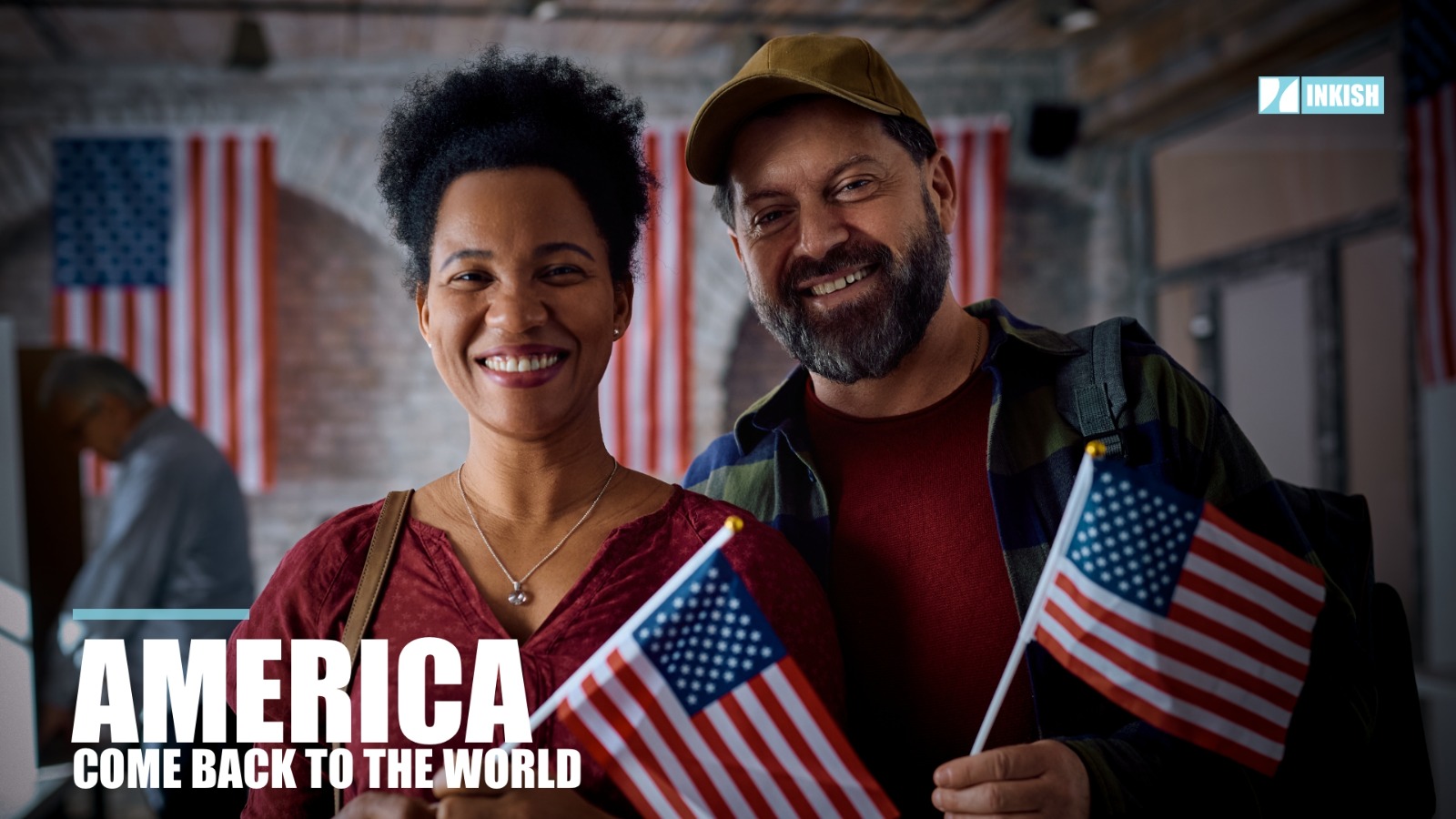
So please, dear friends—come back. Come back as the democratic leader of the free world. Let this dangerous detour pass. Let us forget this hiccup that now threatens to damage the U.S. we know—and the democratic leadership your founding fathers once designed for you.

Proofed (Human)

Listen to This Article

Loading...

Login
New User? Signup
Reset Password
Signup
Existing User? Login here
Login here
Reset Password
Please enter your registered email address. You will recieve a link to reset your password via email.
New User? Signup
Currency Exchange Graph